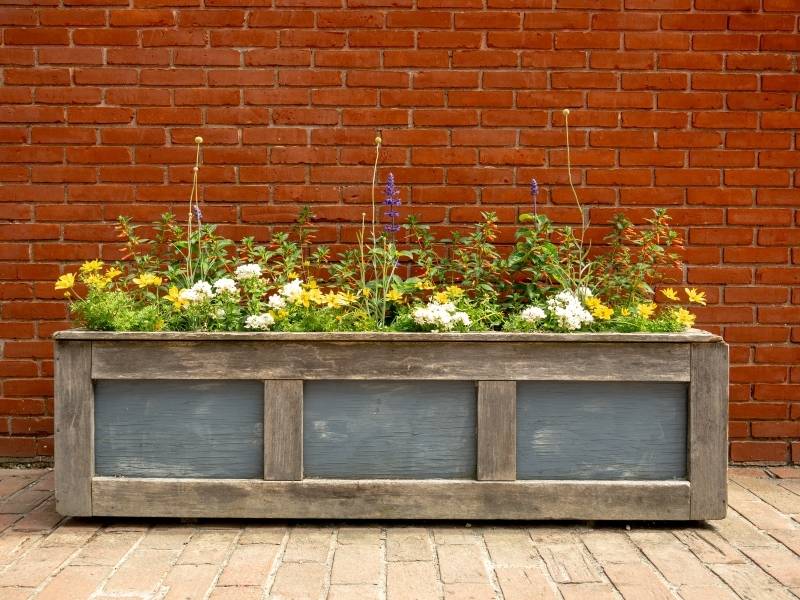
White, chalky streaks creeping across a brick wall are often the first clue. Damp mortar, flaking brick faces, and dark stains near the base usually follow. When a planter sits against or near that wall, poor drainage is one of the most common causes.
Masonry planters are raised beds built from brick, stone, or block that hold soil for plants. They look great framing a patio or entry, but they soak up a lot of water every time it rains or the sprinklers run. Plan where that water goes before the first course is laid, and the walls around the planter will stay drier and last longer.
How Poor Planter Drainage Affects Adjacent Masonry Walls
Wet soil keeps masonry wet. Brick, stone, and mortar are porous, so moisture from a soggy planter moves into the planter walls and any wall they touch. Over time, that steady dampness causes both visible and hidden damage.
Common signs of a drainage problem include:
- Efflorescence, the white salt deposits left when water evaporates from masonry
- Soft, crumbling, or washed-out mortar joints
- Spalling, where the face of the brick or stone flakes off
- Green or dark staining from algae and mildew
- Bulging or leaning planter walls from trapped water pressure
The risk grows when a planter is built against a house. Brick veneer walls usually have weep holes, which are small openings near the bottom that let moisture drain out of the wall. A planter that covers those openings or holds wet soil against the wall can trap moisture inside the wall system.
Planning Masonry Planter Placement and Drainage Outlets
Good drainage starts during layout. First, decide whether the planter needs to touch a wall at all. A freestanding planter with a few inches of space behind it lets air move and water escape, and it keeps soil away from weep holes and siding.
If a planter has to sit against a wall, plan a separation detail. That might be a waterproofed back wall, a drainage gap, or a separate planter wall built in front of the existing one. The right approach depends on the wall type, the planter size, and the overall project design.
Next, decide where water will exit. Weep holes in the planter’s lowest course or drain pipes through the base give water a path out. A planter built on open soil may drain partly downward, while one built on a slab or patio needs outlets through its walls. Talk through outlet size and spacing with your mason before construction starts, since the right setup depends on the planter.
Using Drainage Layers and Waterproofing to Manage Soil Moisture
Inside the planter, layers do most of the work. A typical setup includes:
- Gravel or drainage aggregate at the bottom
- Filter fabric over the gravel to keep soil from clogging it
- A drainage mat against the inside walls in some designs
- Planting soil on top
Each layer gives water a faster path to the outlets than soil alone would. The fabric matters more than most people expect, because fine soil washing into gravel can clog it within a few seasons. Ask what type of fabric and aggregate your mason plans to use.
Waterproofing protects the masonry itself. A membrane or coating on the inside face of the planter walls keeps wet soil from soaking straight into the brick or stone. Waterproofing can’t do the job of drainage, though. A sealed planter with no way out simply becomes a tub, so both systems should be designed together.
Directing Excess Water Away From Walls and Foundations
Water leaving a planter still needs a safe place to go. Outlets that empty onto a patio right beside the house can send water straight back toward the foundation. The goal is to carry it away from walls, footings, and walkways.
Your options depend on the site. Outlets can discharge onto sloped brick pavers or stone pavers that move water away, or onto splash blocks or gravel strips. Larger planters may tie into a yard drain line. The ground around the planter should slope away from the house so water doesn’t pool at its base.
Look at nearby features too. A planter beside a brick patio, an outdoor kitchen, or a retaining wall can change how water moves across the whole area. On sloped yards, check where runoff from higher ground enters the planter so it doesn’t overwhelm the drainage you planned.
Maintaining Planter Drainage to Prevent Long-Term Moisture Damage
Even a well-built planter needs routine checks. Weep holes and drain outlets can clog with soil, mulch, roots, or insect nests. Clear them a few times a year and after heavy storms.
Watch the irrigation as well. Sprinklers and drip lines that run too long keep the soil soaked and the masonry damp. Adjust watering by season, and keep spray heads from hitting nearby brick masonry or stone masonry walls.
Stay alert for early warning signs. New efflorescence, soft mortar, or dark staining near a planter usually means water isn’t leaving the way it should. Catching these signs early often means a simpler repair. Over many years, the soil may need to come out so the fabric, gravel, or waterproofing can be checked or replaced.
Frequently Asked Questions
Do masonry planters need drainage holes?
Most masonry planters need a way for water to escape. Without outlets, water collects in the soil and soaks into the planter walls. That trapped moisture can lead to staining, mortar damage, and spalling. The type and spacing of outlets depend on the planter design and what it sits on.
Can I build a masonry planter against my house?
It’s possible, but it takes careful planning. Wet soil against a house wall can trap moisture and cover the weep holes on brick veneer. Many designs leave a gap or add a waterproofed back wall to separate the planter from the house. A mason can review your wall type and suggest a safer layout.
What causes white stains on a brick planter?
White stains are usually efflorescence, which forms when water carries salts to the surface and evaporates. It’s a sign that moisture is moving through the masonry. Brushing it off may help for a while, but it will return if the water source isn’t fixed. Check drainage outlets, waterproofing, and irrigation first.
Should the inside of a masonry planter be waterproofed?
Waterproofing the inside face is common and helps keep wet soil from soaking into brick or stone. It works best alongside drainage layers and outlets. A waterproofed planter without a way for water to escape can hold water like a tub. The right product depends on the materials and the planter design.
How often should planter drainage be checked?
A quick check a few times a year works for most planters. Look at weep holes and outlets after heavy rain and seasonal cleanups. Watch nearby walls for new stains or soft mortar. Older planters may need a deeper look at the drainage layers over time.
