
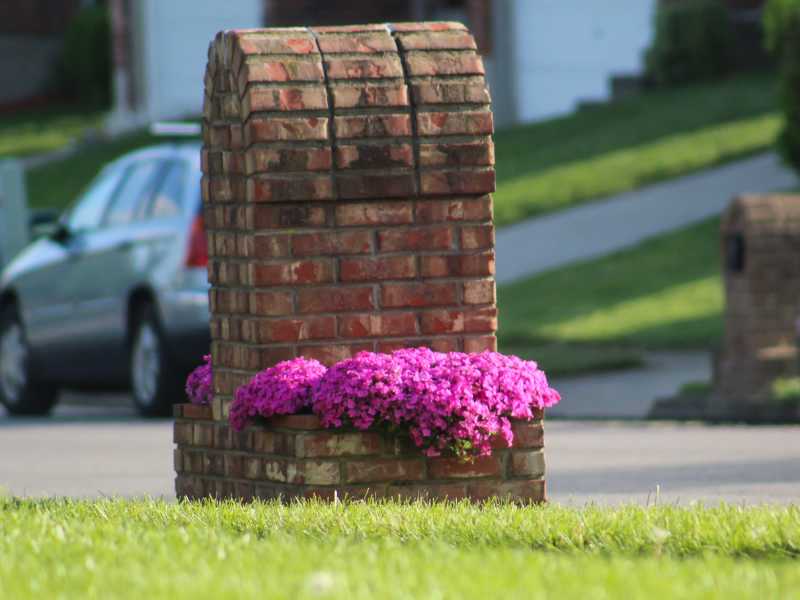
A masonry mailbox with a built-in planter bed can be the nicest thing at the end of a driveway. It can also be the first piece of brickwork on the property to crack, stain, or lean. Wet soil packed against brick is hard on masonry, and planters add weight and moisture right where the mailbox needs to stay stable.
These problems are predictable, which means they’re avoidable. Plan the planter around mail access, give each section the foundation it needs, and keep water moving out of the soil instead of into the brick. Get those pieces right and both the mailbox and the planter can look good for years.
Designing a Masonry Mailbox Base With Built-In Planting Areas
Planter mailboxes come in a few common shapes. Some have a low planter wrapped around the base of the column, while others use a wing wall on one or both sides. An L-shaped planter can also tie the mailbox into a driveway edge or front walkway.
Match the materials to the house first. Brick masonry that echoes the home’s facade looks intentional, and stone masonry on the planter walls can add contrast without clashing. Bring a photo of the house and any existing brick patio or entry features so the mason can compare colors and textures.
Keep the planter in proportion. A huge bed next to a slim column looks heavy, and a tiny box can look like an afterthought. Sketch a few options to scale before choosing, and ask how each layout affects cost and footing size.
Planning Planter Dimensions Around Mailbox Access and Visibility
The mail carrier has to reach the box without leaning over a planter or brushing thorny branches. For curbside delivery, that usually means keeping the front of the planter flush with or behind the mailbox opening. USPS guidelines also set a height range for curbside boxes, so confirm placement with your local postmaster before finalizing dimensions.
Visibility matters as much as reach. House numbers need to stay readable from the street, and tall plants can hide them within a single season. Place the address plaque above the planting zone or on a face that plants won’t cover.
Think about mowing and edging too. A planter that sits right at the curb leaves no room for a trimmer and can get clipped by cars. A narrow strip of brick pavers or stone pavers around the base gives equipment a clean edge to follow.
Check road, right-of-way, and HOA rules before settling on size. Some places limit rigid structures near the street, and covenants may cap mailbox height or footprint. Requirements vary by location, so ask before design work goes too far.
Building Separate Foundations for Masonry Mailbox and Planter Sections
The column and the planter carry very different loads. The mailbox column is tall and narrow, while the planter walls hold back wet soil that pushes outward. Tying both to one rigid footing can crack the brick where the sections meet if they move differently.
Many masons pour separate footings for the column and the planter walls. A small joint between the sections lets each one move a little without breaking the other. Footing size and depth can vary with soil conditions, wall height, local code, and project design.
Soil movement makes this even more important. Clay soils that swell when wet and shrink when dry can lift or drop a footing over time. Ask your contractor how they plan to compact the subgrade and whether the soil on your lot needs extra attention.
Planter walls work like small retaining walls. They need a solid base and enough thickness to resist soil pressure. Even a short wall can bulge or crack if the base underneath it is weak.
Managing Soil Moisture and Drainage Near Masonry Surfaces
Wet soil against brick is the main reason planter mailboxes fail. Brick and mortar absorb water, and constant moisture leads to efflorescence (white salt stains), mortar breakdown, and cracking. The planter has to hold soil without letting that soil soak the walls.
Most well-built planters use a few layers of protection. These details cost little during construction and save expensive repairs later. Common features include:
- A waterproof coating or membrane on the inside planter walls
- A gravel drainage layer at the bottom
- Filter fabric between the soil and the gravel
- Weep holes near the bottom of the planter walls
- A cap that sheds water away from the brick face
Watch the irrigation. Sprinkler heads aimed at the mailbox soak the brick every cycle. Drip lines inside the planter put water at the roots without spraying the masonry.
Grade the ground around the base so it slopes away from both sections. Water that pools at the footing softens the soil and invites settling. A quick look after a heavy rain shows whether the drainage is doing its job.
Selecting Plantings That Complement the Masonry Mailbox Without Affecting Brickwork
Plant choice can protect the brick or slowly damage it. Climbing vines like ivy grip mortar joints and pull them apart over time, and they hold moisture against the brick face. Skip anything that climbs or clings to masonry.
Root size matters in a small planter. Shrubs or trees with aggressive roots can press against the walls and crack the brick from the inside. Low perennials, ornamental grasses, and compact shrubs usually fit better.
Pick plants that stay below the mailbox opening at full size. Read the mature height on the tag, since a small starter plant can double in a year. Drought-tolerant choices also mean less watering, which keeps the brick drier.
Maintenance keeps the setup working. Trim plants back from the brick, clear leaves from weep holes, and refresh mulch without piling it against the walls. Look over the mortar joints once a year and handle mailbox repair early if cracks or stains appear.
Frequently Asked Questions
Can I add a planter to my existing brick masonry mailbox?
Often you can, but it takes planning. The new planter should sit on its own footing so it doesn’t load the old column. The new brick also needs to match the existing brick and mortar as closely as possible. Have a mason check the current mailbox’s condition before adding anything.
Do planter walls need waterproofing?
Most planter builds benefit from it. Wet soil against bare brick leads to staining and mortar damage. A membrane or coating on the inside walls keeps moisture away from the masonry. Pair it with a drainage layer and weep holes so water can leave the planter.
What plants should I avoid near a brick masonry mailbox?
Avoid climbing vines that cling to mortar. Skip plants with aggressive roots or mature heights that block the mailbox door. Thorny shrubs can make the carrier’s job harder. Low, compact plants usually work best.
