
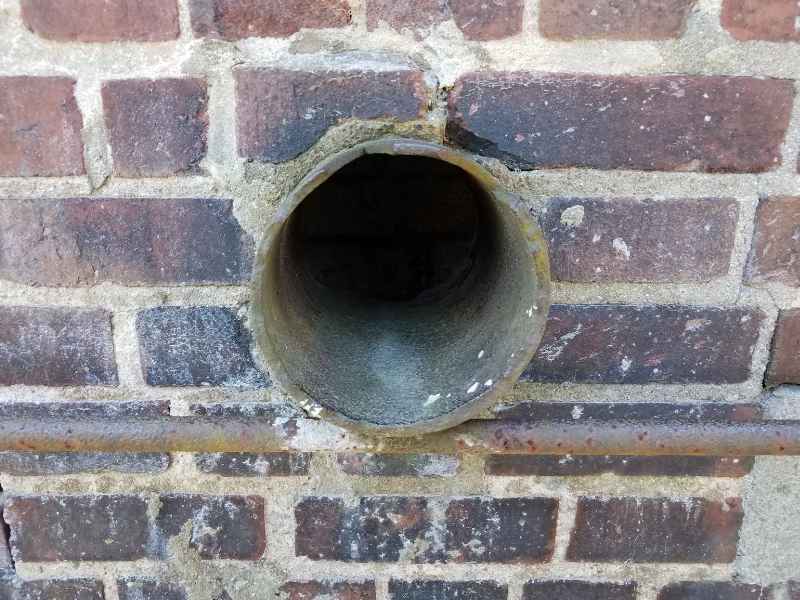
Brick repair around utility penetrations is essential when pipes, wires, and vents leave openings in masonry walls. Some of those openings get sealed well. Many get a quick ring of caulk or spray foam, and a few years later, the brick around them is cracked, stained, or letting water into the wall.
This guide is for homeowners and property managers dealing with damaged brick around hose bibs, dryer vents, AC lines, meters, and conduits. The key takeaway is that good brick repair at a penetration fixes both the masonry and the seal, since one without the other rarely lasts. Check the openings now, before small gaps turn into water damage behind the wall.
Common Causes of Brick Damage Around Utility Penetrations
Damage around utility penetrations often starts when the hole is made. Drilling or chiseling through brick without the right tools can crack nearby bricks and loosen mortar joints. Oversized holes then get filled with whatever is handy, which often means foam or caulk that breaks down in sun and weather.
Movement is the next problem. AC line sets vibrate, pipes expand and contract with temperature, and service lines can shift as a house settles. When a pipe is packed tight in hard mortar with no room to move, the brick around it usually cracks first.
Water finishes the job. Rain running down a pipe or cable can follow it straight into the wall, and a leaking hose bib can soak the brick below it for months before anyone notices. Over time, that moisture weakens mortar and can lead to staining, flaking brick faces, or mold behind the wall.
Identifying Cracked Bricks and Gaps Around Pipes and Conduits
Walk the outside of the house and look at every spot where something passes through the brick. Most homes have more penetrations than owners realize. Check each one for these signs:
- Cracked or chipped bricks next to the opening
- Mortar that’s missing, crumbling, or pulling away
- Gaps you can see into the wall cavity through
- Dried-out, cracked, or missing caulk and foam
- Rust or water stains running down from the opening
- Bricks with flaking faces, a condition called spalling
Look inside too. Water stains on drywall, peeling paint, or a musty smell near an exterior wall with a hose bib or vent can point to a leak at the penetration. Note which openings look worst so the repair can start there.
Preparing Damaged Masonry Openings for Brick Repair
Preparation decides whether the repair holds. Start by identifying what runs through the opening and whether it’s still in use. Gas lines, electrical service, and other live utilities need a licensed professional or the utility company involved before anyone cuts or chips around them.
Next, the mason removes failed caulk, foam, and loose mortar from around the pipe. Damaged bricks are cut out by grinding the surrounding joints, which protects the good bricks next to them. The opening is then cleaned so new mortar and sealant can bond properly.
This is also the time to look behind the brick. Most brick homes have veneer, which is a single layer of brick with a small air space and a weather-resistant barrier behind it. If that barrier is torn or unsealed around the penetration, it should be repaired before the brick goes back in. Ask your mason whether they’ll check it, since it’s easy to skip once the wall is open.
Replacing Bricks and Sealing Gaps Around Utility Penetrations
Replacement bricks need to match the existing wall in size, color, and texture. A mason can often find a close match from salvaged or current brick, and sometimes pulls bricks from a hidden spot on the same house. Bricks next to the pipe may need to be cut or core-drilled so they fit cleanly around it.
Mortar should match the original color and suit the brick’s strength. Mortar that’s too hard can cause new cracks around the repair as the wall moves. Joints are tooled to match the rest of the wall so the patch blends in.
The gap around the pipe itself usually gets a flexible seal instead of hard mortar. A common approach is a foam backer rod pushed into the gap, then a masonry-compatible sealant over it. Larger pipes are sometimes set in a sleeve so the line can move without cracking the brick. Trim plates or flanges can cover the joint and help shed water around vents and hose bibs.
Preventing Moisture Intrusion and Future Masonry Deterioration
Most future damage comes from water, so the goal is to keep it moving away from the wall. Cables and lines should have a drip loop, a small downward bend that makes water fall off before it reaches the opening. Vents and hose bibs should slope slightly outward when possible.
Sealants don’t last forever. Check them once a year and replace any that have cracked, shrunk, or pulled away from the brick. Fix dripping hose bibs right away, because constant water on the same patch of brick speeds up deterioration.
Abandoned penetrations need attention too. Old cable holes and unused vent openings should be filled with matching brick and mortar instead of being plugged with foam. Keep the weep holes near the bottom of the wall clear as well, since they let water that gets behind the brick drain back out.
Frequently Asked Questions
Can I just caulk around a pipe in my brick wall?
Caulk can seal a small gap around a pipe, but it won’t fix cracked bricks or loose mortar. If the brick around the opening is damaged, the masonry needs repair first. Use a sealant made for masonry and replace it as it ages. For larger gaps, a backer rod with sealant holds up better than caulk alone.
Why is the brick cracking around my AC lines?
AC line sets vibrate and move slightly as the system runs. If the lines are packed tightly in hard mortar or the hole was cut roughly, that movement can crack nearby brick. Water following the lines into the wall can make it worse. A flexible seal or sleeve usually helps prevent repeat cracking.
How much does brick repair around a penetration cost?
Cost varies with the number of damaged bricks, how easily the brick can be matched, and access to the opening. A simple reseal costs far less than cutting out and replacing several bricks. Coordinating with a plumber or electrician can add cost when utilities need work. Ask for a written scope so you know exactly what’s included.
