
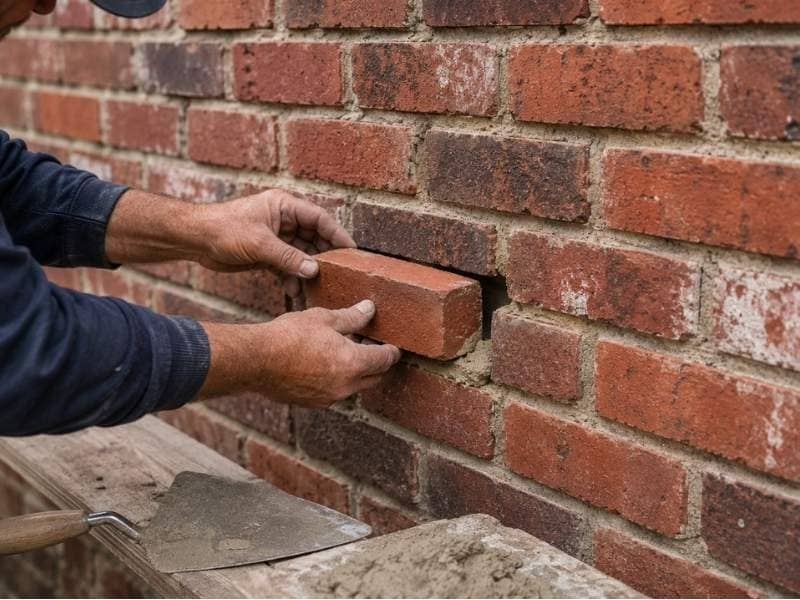
Replacing damaged brick sounds straightforward until the new brick goes in and stands out like a fresh patch on an old wall. The color is brighter, the texture looks different, and the repair draws more attention than the damage did. A skilled brick mason knows this going in and works around it. Blending new brick with old takes careful material selection, matched mortar, consistent pattern work, and a realistic understanding of how brick changes over time.
The Brick Industry Association estimates that poorly matched brick repairs are one of the most common complaints homeowners raise after masonry work is completed. Getting the match right from the start saves time, money, and the frustration of a repair that looks worse than the original problem.
Find Brick That Looks Similar
The first challenge is finding a brick that comes close to what’s already on the wall. Brick manufacturers change their formulas over time, and many older brick types are no longer in production. A brickmason starts by examining the existing brick carefully, looking at color, size, surface texture, and how much variation exists across the wall.
Most older brick walls have natural variation. Some bricks are darker, some lighter, and the surface texture shifts slightly from one brick to the next. That variation actually helps a repair because the goal isn’t to copy one brick exactly. It’s to find new brick that falls within the range of colors and textures already present on the wall.
Salvaged brick is worth considering for older homes. Reclaimed material from the same era often carries the weathering and color tone that new brick simply doesn’t have yet.
Use the Right Mortar Color
Mortar covers roughly 15 to 20 percent of any wall face on a standard running bond pattern. A mortar color that doesn’t match the existing joints makes a repair visible from across the street, even when the brick itself is a reasonable match.
Mortar comes in a range of pre-mixed colors, and a brickmason can blend pigments to get closer to an existing joint color. Matching works best on a dry wall in natural daylight. Mortar looks different when wet, and artificial lighting changes how the color reads against surrounding brick.
Mortar strength matters too. Older homes were often built with softer lime-based mortar. Using harder Portland cement mortar on an older wall can cause surrounding brick to crack over time because the two materials expand and contract at different rates. A brickmason selects mortar strength appropriate for the age and condition of the existing wall.
Follow the Same Brick Pattern
Brick walls are laid in specific patterns called bonds. The most common is running bond, where each brick is offset by half a length from the row above and below. Placing new brick in a different pattern breaks the wall’s visual rhythm immediately, even when the brick and mortar colors are close.
A brickmason studies the existing bond before removing any damaged brick and replicates it exactly in the repair area. Joint width is part of the pattern too. If existing joints are three-eighths of an inch wide, new joints should match that width. Wider or narrower joints change the visual spacing of the wall and make the repaired section look out of place.
Give New Brick Time to Blend In
New brick is brighter, cleaner, and more uniform than brick exposed to sun, rain, and temperature changes for years. That difference is normal. It doesn’t mean the repair was done poorly.
Brick weathers gradually. UV exposure fades the surface color. Mineral deposits from rainwater create subtle tone variations. Most new brick repairs become noticeably less visible within one to three years as natural weathering brings the new material closer to the surrounding wall.
Some masons apply a diluted acid wash to new brick to speed up the blending process. It removes some surface brightness and opens the texture slightly so the brick weathers faster. Not every repair needs it, but it’s a useful option when the color difference is significant.
Check the Finished Repair
A completed repair should hold up to close inspection. Check that joint lines are consistent and follow the same horizontal and vertical alignment as the surrounding wall. Joints should be smooth and fully filled with no gaps or crumbling edges. Each new brick face should sit flush with the existing wall surface, not pushed in or protruding out. Any mortar smeared onto the brick face during installation should be cleaned off completely.
Step back roughly 10 to 15 feet and look at the repair from a normal viewing distance. The eye picks up inconsistencies in line and color naturally at that range. If something looks off, it’s worth addressing before the job is considered done.
Frequently Asked Questions
Why doesn’t new brick match old brick right away?
New brick hasn’t been exposed to weather, sunlight, or environmental buildup yet. Old brick develops its color and texture gradually over years of exposure. The difference is normal and typically fades within one to three years as the new brick weathers.
Can faded brick be matched?
Getting close is possible, but an exact match is rarely achievable. A brickmason looks for brick that falls within the range of tones already on the wall. Salvaged brick from a similar era often provides the closest match for older homes.
Does mortar change color over time?
Yes. Fresh mortar is lighter and more uniform than aged mortar. It darkens slightly as it cures and continues shifting in tone as it absorbs moisture over time. A brickmason accounts for this when selecting mortar color, choosing a shade that will age toward the existing joint color.
How can I tell if a brick repair was done well?
Look for consistent joint width and alignment, fully filled joints with no gaps, brick faces flush with the surrounding wall, and a clean surface free of mortar smears. Step back to about 10 to 15 feet and check whether the repair blends into the wall or draws the eye.
Can one damaged brick be replaced?
Yes. The damaged brick is carefully cut out without disturbing the surrounding ones, the cavity is cleaned, and a matching replacement is set with fresh mortar. Done correctly, a single brick replacement is clean, stable, and barely noticeable once the mortar cures.
