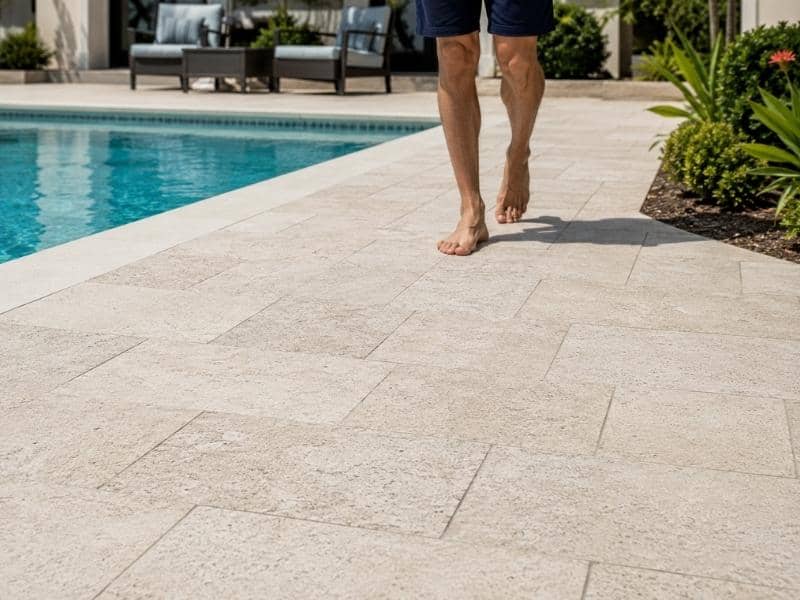
Bare feet decide whether a pool deck works. A stone that looks perfect in the showroom can scrape your soles, turn slick when it’s wet or burn too hot to cross on a summer afternoon. Choosing stone pavers for a pool means judging them by feel, not just by looks. The right surface grips a wet foot, stays bearable in summer sun and holds together where water hits it all day. This article covers how to test paver texture by touch, how summer heat changes what’s comfortable underfoot, how to drain the deck without slopes your feet notice and how to keep joints tight so nobody catches a toe. Get these right, and the deck feels good every time someone steps out of the water.
Choosing Stone Pavers With a Barefoot-Friendly Texture
Stone pavers around a pool get walked on by bare feet all day, so texture matters more here than almost anywhere else in a yard. The surface needs enough grip to hold a wet foot without feeling rough or sharp. Too smooth and it turns slick when it’s splashed. Too coarse and it scrapes and stings the soles of your feet.
The finish is where that balance lives. Lightly textured, tumbled, brushed and naturally cleft stone all give traction without a harsh bite. A heavily ridged or jagged surface might look like it grips well, yet feel awful to stand on. The only honest test is touch. Run your hand and bare foot across a sample before you decide, because a finish that photographs beautifully can feel like sandpaper in person.
Appearance still counts, but it can’t be the only thing you shop for around a pool. A stone you’d love on a patio wall might be miserable underfoot when it’s the deck. Feel each option the way your feet will, wet and dry, before it goes anywhere near the water.
How Summer Heat Affects Poolside Stone Surfaces
Summer sun is hard on poolside stone surfaces. The surface bakes all day, and the wrong stone can get too hot to cross without shoes. Since the whole point of a pool is walking out barefoot, surface heat is a comfort problem you plan around, not one you discover in the middle of the season.
Color and material drive how much heat a paver holds. Dark, dense stone soaks up sunlight and radiates it back at your feet. Lighter surfaces stay cooler because they reflect more of the sun instead of storing it. Denser materials also hold heat longer, so they stay hot well after you’d expect them to cool.
Finish plays a smaller part, but it’s real. A surface with some texture and a lighter tone tends to feel more bearable at midday than a smooth, dark slab in full sun. If part of your deck sits in afternoon shade and part bakes, you can even mix placement to your advantage. Test a sample in direct summer sun for an hour, then stand on it, before you trust it around the pool.
Planning Drainage Without Creating Uncomfortable Slopes
Water has to leave a pool deck fast, but the slope that moves it shouldn’t be something your feet notice. A paved pool surround needs to shed splash-out and rain away from the pool and the walking zones. Done right, that drainage happens under a grade so gentle you never feel like you’re walking downhill.
The trick is a steady, even slope instead of sharp dips. Standard practice pitches a deck a small amount per foot, just enough to pull water off without ponding. Trouble starts when the grade gets uneven. Low spots collect puddles you step into, and abrupt changes in height catch bare feet that aren’t watching the ground.
Around a pool, comfort and drainage go hand in hand. A surface that drains well stays drier, which means better grip and fewer slick patches for bare feet. A surface with awkward slopes and standing water gives you both a wet foot and a stumble risk. Plan the fall of the deck so water disappears while the walking stays flat and easy.
Keeping Paver Joints Stable Near Constant Water Exposure
Joints are where a poolside paver surface gets dangerous for bare feet. Constant splashing, pool chemicals and rain all work at the sand and base under the stone. When that support washes out, pavers start to shift, and a shifting paver is a stubbed toe waiting to happen.
Three things keep the stones locked in place. A solid, compacted base gives the whole surface something firm to sit on. Edge restraints around the perimeter stop the field from spreading outward over time. Full joints between the stones let them work as one surface instead of loose pieces. Skimp on any of the three near a pool, and water finds the weak spot fast.
You feel a failing joint before you see it. Gaps open up between stones, and a bare toe can catch the raised edge. A paver that’s lost its base rocks under your weight, which is startling and unsafe next to water. Wide, uneven joints also trap grit that scratches at your feet. Tight joints and firm edges keep the surface smooth and predictable, which is exactly what you want when nobody’s wearing shoes.
Comparing Poolside Stone for Comfort, Grip, and Maintenance
No single stone wins on every measure, so choosing a poolside paver means trading one strength against another. Surface temperature, slip resistance, durability, stain resistance and upkeep all pull in slightly different directions. A stone that stays cool might stain easily. One that resists stains might run hot or feel slick.
For a pool deck, weight the comfort and safety factors first. Heat underfoot and wet grip affect every single person who uses the pool, every time. Durability and cleaning matter too, but a gorgeous, low-maintenance stone that burns your feet or turns slick has failed at its main job. Rank the barefoot experience at the top, then sort the rest.
Testing beats guessing here. Take samples home and check them the way you’ll live with them. Wet each one and feel the grip. Leave it in the sun and touch it at the hottest part of the day. Splash a little and see how fast it dries. A stone that passes those tests in real sun and water is worth far more than one that only looks good in a showroom.
