
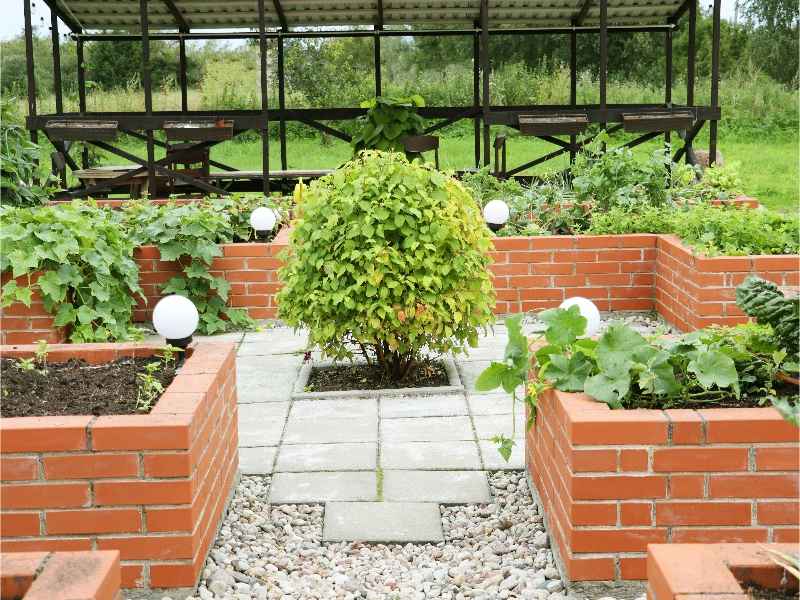
A brick patio with well-built borders around its planting beds keeps the clean lines you paid for while letting plants thrive right next to the paving. Planting beds soften hard surfaces and make outdoor spaces feel lived in. The trouble is that soil, water, and roots are rough neighbors for brick. Within a few seasons, edges can sink, bricks can tilt, and mulch ends up scattered across the pavers.
Planning Brick Patio Borders Around Built-In Planting Beds
Start with how the beds will work. Some beds sit at patio level with a simple brick edge. Others rise above the surface with low brick walls, creating raised planters that double as seating or dividers. Each approach needs a different border.
Brick patio borders also frame the space visually. A contrasting border pattern or brick color can outline beds and make the layout feel intentional. Matching the border to existing brick masonry on the house ties everything together.
Bed locations should be set before the patio base is built. Cutting beds into a finished patio is messy and often weakens nearby pavers. Mark bed outlines with paint or hose on the ground before construction begins.
Choosing Brick Patio Patterns for Straight and Curved Garden Edges
Border patterns change how a bed reads from across the yard. Bricks set side by side with their long edges facing the bed create a bold frame. Bricks laid end to end along the bed give a slimmer line. Double rows add weight around larger beds.
Straight edges are the easiest to build cleanly. Curved edges take more work, since bricks need to be cut or angled to follow the line. Tight curves may need many small cuts to avoid wide, uneven joints.
Some patios combine brick borders with stone pavers or a stone patio field. That can work well when colors complement each other. Bring samples together outdoors before committing to a combination.
Creating Stable Border Foundations Beside Planting Soil
Borders fail when they lean or sink, and soil is usually the reason. Garden soil holds water, shifts as it dries, and gives little side support. A brick patio border needs a base that resists that movement.
Most stable borders sit on a compacted gravel base that extends beyond the brick line. Some designs set the border bricks in mortar on a concrete footing, while others use edge restraints to hold sand-set pavers in place. The right approach depends on soil, patio type, and how much traffic the edge sees.
Raised bed walls need more support. Low brick walls holding back soil act like small retaining walls. They need a solid footing, and taller walls may need drainage and reinforcement, depending on height and design.
Fabric or a barrier between bed soil and patio base helps stop soil from migrating into the gravel. Clean base material drains better and stays firm. Mixing the two leads to soft spots and settling.
Managing Water Movement Between Patio Bricks and Planting Beds
Water moves in both directions at bed edges. Patio runoff can flood beds, and bed irrigation can soak the patio base. Planning drainage early keeps both healthy.
Most patios slope slightly so water flows off the surface. Decide whether runoff should head toward beds, lawn, or a drain. Directing large amounts of water into small beds can drown plants and wash soil onto the pavers.
Raised beds need drainage too. Water trapped inside a brick planter pushes on the walls and stains the brick. Weep openings or gravel at the base let excess water escape without carrying soil out.
Irrigation deserves attention. Sprinkler heads aimed at brick borders keep the joints and base wet. Drip lines inside beds usually cause fewer problems near paving.
Maintaining Brick Patio Borders Around Growing Plants and Roots
Roots are patient, and they will find weak spots. Trees and aggressive shrubs planted near borders can lift bricks over time. Choose plants that suit the bed size, and keep large trees farther from the paving.
Root barriers can help near existing trees. They guide roots downward instead of under the border. Check with your mason about where barriers make sense before installation.
Routine care keeps borders tight. Pull weeds from joints before they spread. Top up joint sand or repair mortar as needed. Reset any brick that lifts or tilts before it trips someone or loosens its neighbors.
Mulch piled above the border spills onto the patio with every storm. Keep mulch slightly below the brick edge. That small gap keeps the surface clean and the border visible.
Frequently Asked Questions
Can I add planting beds to an existing brick patio?
Sometimes, but cutting into a finished patio can loosen nearby bricks. The base under the new bed area may need to be removed and the edges restrained. Planning beds during construction usually gives better results. A mason can tell you whether your patio can be modified cleanly.
Should brick borders be mortared or set in sand?
Both can work. Mortared borders on a solid footing resist movement and suit raised beds. Sand-set borders with edge restraints are common for flush edges on paver patios. The choice depends on your patio type, soil, and design.
How do I keep soil from washing onto the patio?
Keep the bed soil and mulch slightly below the border. Grade the bed so water soaks in instead of running out. Use a barrier between soil and patio base. Adjust irrigation so it doesn’t flood the edges.
