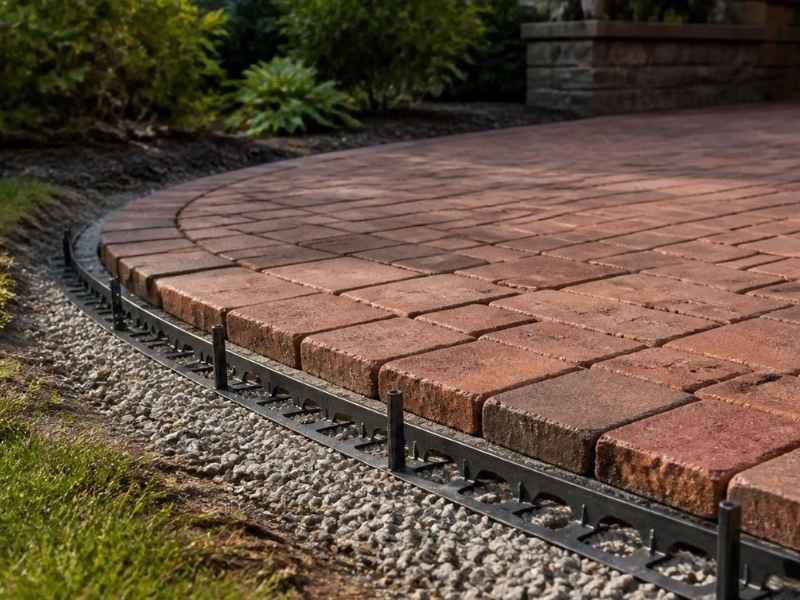
A brick patio looks solid the day it goes in. The pavers sit tight, the lines run straight, and the surface feels firm underfoot. Give it a few seasons without the right edge support, and those clean lines can start to drift.
Edges are the weak point of any paver patio. The outer bricks have nothing holding them from the side. Without restraint, they slide outward, gaps open up, and the whole surface loosens. Once the edge goes, the rest of the patio soon follows.
Here is the takeaway. A brick patio needs proper edge restraint and strong perimeter support to hold its shape over time. Edge restraint is the system that locks the outer pavers in place and helps prevent them from shifting outward. The sections below explain why edges spread, how restraints stop it, and what to check before the job is done.
Why Brick Patio Edges Begin to Spread
A brick patio is built from many separate pavers set on a prepared base. The pavers are not glued or mortared in most patio designs. They rely on tight joints, pressure from all sides, and proper base support to stay in place. That balance is what keeps the surface firm.
The problem is that edge pavers only have support on the inside. Nothing pushes back from the outer side. Foot traffic, weather, and the weight of the patio itself all press outward. Over time, that pressure nudges the edge bricks away from the field.
Texas soil adds to the strain. Clay-heavy ground in the Fort Worth area swells when wet and shrinks when dry. That movement works against a patio edge with no restraint. As the edges creep, joints widen and pavers wobble.
How Edge Restraints Keep Patio Pavers in Position
Edge restraint is a border that holds the outer pavers tight. It sits along the perimeter and blocks the bricks from sliding out. This added edge stability helps keep the patio aligned and prevents the surface from spreading over time.
Restraints come in a few common forms. Some are plastic or metal strips staked into the base along the edge. Others are a band of concrete, called a concrete haunch, set against the outer pavers. A solid border of soldier bricks can also help when built correctly.
Whatever the type, the job is the same. The restraint gives the edge pavers something firm to push against. That pressure holds the joints tight across the whole patio. Common restraint options include:
- Plastic or metal edging staked to the base
- A concrete haunch along the perimeter
- A mortared border course
- A poured curb at the patio edge
Your mason can help pick the right one for your patio and soil.
Why Base Preparation Matters at Patio Perimeters
Edge restraint only works if it sits on a solid base. The base is the layer of compacted material under the pavers. At the edges, that base needs to extend past the last brick. A restraint anchored in loose soil will not hold.
Good base prep starts below the surface. A proper base includes compacted gravel topped with a setting layer such as sand. This base must reach beyond the paver edge to support the restraint. When the base stops short, the edging has nothing firm to grip.
Compaction is just as important at the perimeter. Loose or thin base material lets the edge sink or shift. That movement pulls the restraint out of line and lets pavers spread. A well-built, compacted base at the edges keeps the whole system tight.
Coordinating Patio Edges With Drainage and Landscaping
A patio edge does more than hold pavers. It also meets the yard, the plants, and the flow of water. Planning these together keeps the edge strong and the patio dry.
Water is the main concern. A brick patio should slope gently so water runs off the surface. That runoff needs somewhere to go once it leaves the edge. If water pools along the perimeter, it can wash out the base and undermine the restraint.
Landscaping plays a role too. Garden beds, mulch, and irrigation near the edge add moisture to the soil. In clay ground, that extra water fuels swelling and shrinking. A good plan keeps beds and sprinklers from soaking the patio edge. Any local drainage rules can vary by city and county, so confirm them before major work.
Checking Edge Support Before Patio Installation Is Complete
The last chance to catch an edge problem is before the job wraps. Once the patio is finished and settled, fixing the edge means pulling it apart. A quick check at the end saves that trouble.
A mason should confirm the restraint is fully installed and anchored. They should also check that the base extends past the pavers and is well compacted. The edge pavers should sit tight with no gaps or movement. Small fixes now prevent big repairs later.
This review is worth the time on every patio. A firm, well-supported edge is what keeps the surface tight for years. Ask your mason to check the edge support before calling the work done. That final step protects the whole patio.
