
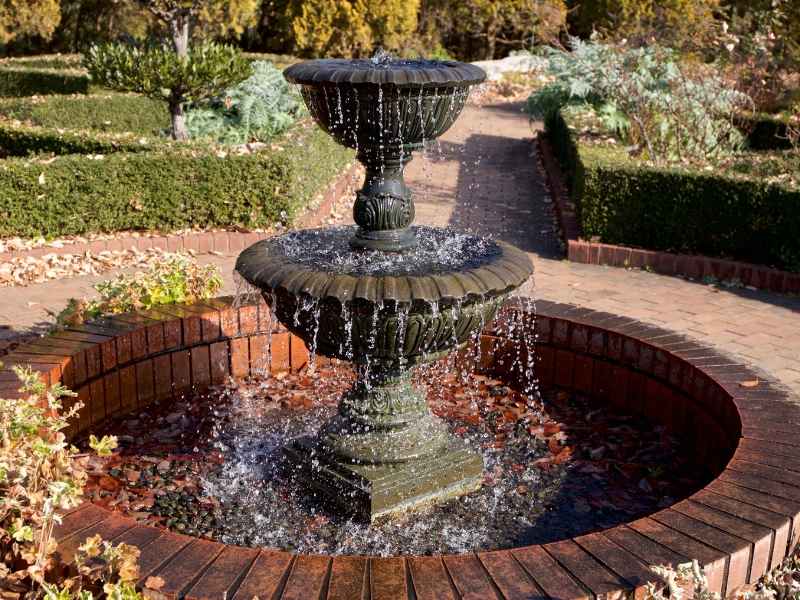
A masonry contractor can help restore brickwork around fountains and ponds, where constant moisture can gradually wear down mortar joints and damage surrounding materials. Water is hard on brick, especially when a fountain or pond keeps it damp year-round. Joints wash out, caps loosen, and white crust creeps up the walls. Small problems can spread faster here than on a dry garden wall or brick patio. The good news is that most water feature brickwork can be restored without tearing the whole structure out, as long as the repair addresses both the moisture source and the damaged masonry.
Identifying Water-Related Damage in Fountain and Pond Brickwork: What a Masonry Contractor Looks For
Start with the obvious signs. White, powdery deposits (efflorescence) mean water is moving through the brick and carrying salts to the surface. Flaking or popped brick faces, called spalling, show that moisture is breaking the brick down from the inside. Eroded mortar joints, especially along the waterline and under the coping, are usually the first real failure point.
Some damage hides better. A feature that keeps losing water may have a leak in the masonry, the liner, or the plumbing, and those need different fixes. Loose bricks along the edge can point to a base that’s washing out underneath. Before any brick work starts, have the pump and plumbing checked so you’re not rebuilding a wall around a leaking pipe.
Walk around the feature too. Look at how water drains from the surrounding brick pavers or stone patio, and check whether splash is hitting nearby walls, seat walls, or an outdoor kitchen. Damage near a water feature isn’t always caused by the feature itself.
Removing Deteriorated Mortar Without Disturbing Surrounding Brick Features
Repointing starts with getting bad mortar out cleanly. The mason removes failed mortar from the joints until sound material is reached, using hand tools or carefully controlled grinders. Rushing this step chips brick edges, and chipped edges let even more water in. On older fountains with decorative patterns, slow and careful beats fast every time.
The new mortar matters as much as the removal. Mortar that’s harder than the surrounding brick can force stress into the brick and cause it to crack or spall over time. A good mason chooses a mix suited to the brick, the exposure, and the look of the existing joints. Color and joint profile should match too, or the repair will stand out for years.
Expect the feature to be drained and dried for this work. Mortar needs time to cure before it’s exposed to standing water again. Ask your mason how long the feature should stay empty before refilling.
Matching Replacement Bricks to Existing Patterns and Finishes
Matching brick on a water feature is tricky because constant moisture changes how the old brick looks. Years of water, algae, and sun shift the color, so a brand-new brick of the same type can still look wrong. Masons often look for salvaged or reclaimed brick, or pull matching units from hidden spots on the same structure. Sometimes the best option is a close blend set in a pattern that hides small color differences.
Size and pattern need attention too. Older brick may not match modern dimensions, and a slight difference throws off running bond, herringbone, or soldier courses. Ask to see a sample or small test area before the full repair. Durability counts as well, since brick around water should be suited for heavy moisture exposure, and in areas with freezing winters, it should be rated for that kind of weathering.
Brick and stone choices depend on appearance, exposure, existing masonry, and budget. Neither material is always the better pick. Some owners mix brick masonry walls with stone caps for added durability at the waterline.
How a Masonry Contractor Repairs Brick Edges and Water Feature Borders
Edges take the most abuse. Coping, caps, and rowlock courses along a pond or fountain rim get wet, dry out, and get stepped on or bumped. Once a cap loosens, water runs straight into the wall below it. Fixing edges early prevents much larger rebuilds later.
Repairs usually involve removing loose caps, cleaning the bed, and resetting them on fresh mortar. The mason checks that the top surface sheds water away from the joints instead of letting it pool. Caps with a slight overhang or drip edge help keep water off the wall face. Where the border meets a brick patio or walkway, the transition should be level and stable so it doesn’t trip anyone or trap water.
If edges keep moving after resetting, the problem may be under the brick. Water leaking into the base can wash out support, and a pond wall that doubles as a retaining wall may face soil pressure as well. Larger structural problems may need input from an engineer, depending on the design and size of the feature.
How a Masonry Contractor Protects Restored Brickwork From Moisture
Brick holding water usually needs a waterproof layer behind it. Many fountains and ponds rely on a liner or membrane, while the brick acts as the visible face. If that layer has failed, new mortar and brick will just get soaked again. Ask your mason how water is contained in your feature before agreeing to cosmetic repairs.
Sealers can help in some situations, but they’re not a cure-all. The wrong sealer can trap moisture or break down under constant submersion. If the pond holds fish or plants, ask whether the product is safe for that environment. A breathable product applied to the right areas usually works better than coating everything.
A few habits make restored brickwork last longer:
- Adjust nozzles to cut down on splash against walls
- Keep the surrounding grade sloped away from the feature
- Clean algae with a soft brush instead of high-pressure washing
- Avoid harsh acid or chlorine cleaners on mortar
- Inspect joints and caps every season
Frequently Asked Questions
Why is there white residue on my fountain’s brick?
That’s usually efflorescence. It forms when water moves through brick and leaves salts behind as it dries. It’s a sign that moisture is getting into the masonry. A mason can clean it and find the source.
Can damaged brick be repaired without rebuilding the whole fountain?
Often, yes. Repointing joints, replacing damaged units, and resetting caps can restore much of the structure. Full rebuilds are usually needed only when the base or waterproofing has failed badly. An inspection will tell you which situation you’re dealing with.
Can you match old brick on a water feature?
Close matches are usually possible. Masons may use salvaged brick, reclaimed units, or blends that hide slight color differences. Aged color and size are the biggest challenges. Ask to see a sample before the full repair begins.
