
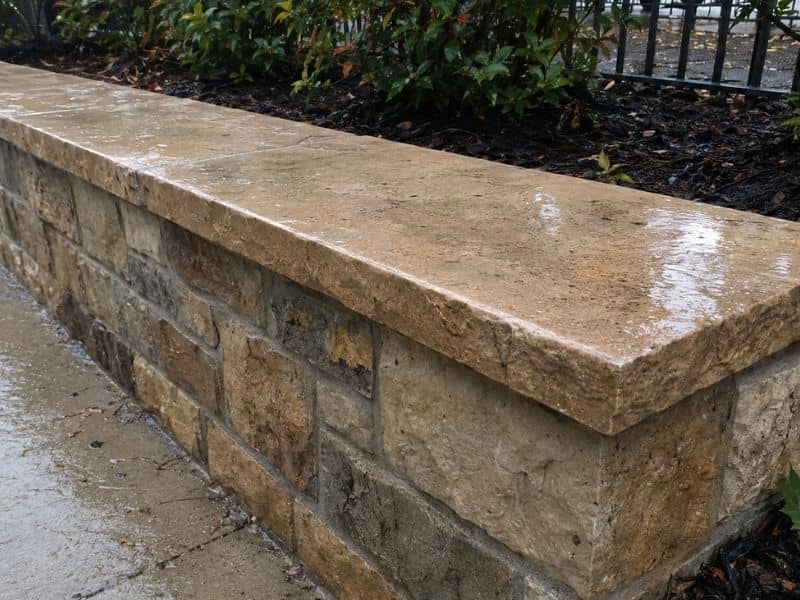
Wall caps do quiet work on top of a low masonry wall, and most people never notice them until rain starts causing trouble. A cap is the finished top piece that covers the exposed masonry, and its main job is keeping rain from soaking into the wall. A calm afternoon can turn into a hard downpour within minutes, that job matters more than it looks. When a cap sheds water well, the wall below stays cleaner and drier for years. When a cap fails, water finds its way in and slowly wears the wall down. What follows covers how caps move water, why overhang and slope help, how to pick the right stone and how to spot a cap that’s stopped doing its job.
How Wall Caps Shed Rainwater From Low Masonry Walls
A well-shaped cap pushes rain off the top of the wall instead of letting it pool there. The top of a low wall is flat and open, so without a cap the masonry drinks in water every time it rains. A cap seals that surface and gives the water a path to run off. That simple change keeps moisture from settling into the joints and the block below.
The shape of the cap decides how fast water leaves. A gently pitched or slightly rounded top sends rain toward the edges and off the wall. A dead-flat cap lets water sit and soak through tiny cracks over time. A good cap does more than cover the top. It covers it so water keeps moving.
Wall Cap Overhangs That Keep Water Off Masonry Faces
An overhang is the part of the cap that reaches past the wall face, and it keeps runoff from sliding straight down the sides. Without it, water rolls right off the top and clings to the masonry below. Over many storms, that constant wetting stains the wall and works into the joints. A small lip changes the water’s path so it drops clear of the face instead.
Fort Worth storms make this detail count. When heavy rain comes down fast, a lot of water hits the cap in a short time. An overhang with a drip edge underneath gives that water a place to fall away from the wall. Even a modest overhang keeps the front and back of a low wall much drier during a hard downpour.
Choosing Cap Materials for Fort Worth’s Changing Weather
The right cap material stands up to sun, sudden rain and the odd winter freeze without breaking down. Fort Worth weather swings a lot, so a cap has to handle heat one week and a cold snap the next. Dense, low-absorption stone takes in less water, which helps it last through wet spells. A softer, more porous stone soaks up more and wears faster.
Thickness and surface finish matter too. A thicker cap resists cracking and holds its shape under weight and weather. A smooth, tight surface sheds water better than a rough, open one that traps moisture. When water gets into a stone and then freezes, it expands and pushes the stone apart, so lower absorption also means fewer freeze problems. Picking a cap built for these conditions saves repairs down the road.
How Joint Placement and Slope Guide Where Rain Goes
Cap joints and slope decide where rainwater travels, and getting them wrong leaves the wall open to leaks. The joints are the seams between cap pieces, and they turn into weak spots when water pools nearby. When the cap slopes the right way, rain runs toward the edge and off the wall before it reaches a seam. When the slope is flat or tilts the wrong way, water gathers at the joints and finds a way through.
Joint placement should keep seams out of the low spots where water collects. A joint sitting in a puddle takes on water with every storm. During heavy rain, a poorly sloped cap can send water straight into those seams instead of away from them. Good slope and smart joint spacing work together to keep the top of the wall draining, not holding.
Signs Wall Caps Are No Longer Protecting a Low Wall
You can usually spot a failing cap by looking for water that lingers where it shouldn’t. Caps wear out slowly, so the early clues are easy to miss until a stain or a soft joint shows up. Catching these signs early keeps a small cap issue from turning into wall damage.
Watch for these warning signs:
- Damp patches on the wall that stay wet long after the rain stops
- Dark staining just below the cap edges
- Cracked, crumbling or open joints between cap pieces
- Water sitting in puddles on top of the cap after a storm
- Loose or shifted cap pieces that no longer sit flush
Any one of these means water is reaching the masonry instead of running off. The longer it goes, the deeper the moisture works into the wall. A quick look after a heavy Fort Worth rain is often all it takes to catch a cap that’s slipping.
Frequently Asked Questions
What are wall caps used for?
Wall caps cover the open top of a low masonry wall and steer rain away from it. The top is the most exposed part of the wall, so a cap shields it and gives water a clear path off the surface. That keeps moisture out of the joints and the block underneath.
Should wall caps extend beyond the edge of a wall?
Yes, a cap should reach a little past the wall face so runoff drops clear instead of clinging to the sides. That small overhang breaks the water’s path down the masonry. It keeps the front and back of the wall drier and cleaner over time.
Why should wall caps be sloped?
A sloped cap lets rain drain off quickly rather than pooling on top. Water that sits on a flat surface has time to soak through small cracks and seams. A gentle pitch sends it to the edge and off the wall, which is what you want.
What happens when wall caps allow water to sit on top?
Standing water raises how much moisture the cap and wall take in, and that leads to trouble over time. The longer water pools, the more it works into joints and pores. Repeated soaking can wear the masonry and shorten the life of both the cap and the wall.
Are stone wall caps suitable for Fort Worth weather?
Stone caps work well in Fort Worth when you match the stone to the climate. A dense, low-absorption stone with enough thickness handles hot sun, fast rain and winter freezes better than a soft, porous one. The right pick sheds water and holds up through the seasons.
