
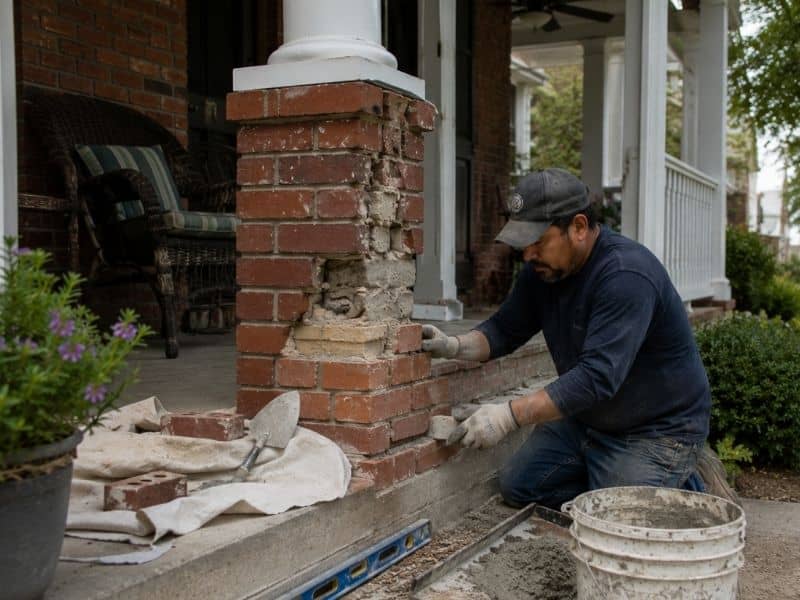
Porch columns take a beating that most homeowners never think about. They hold up the roof, sit exposed to weather on every side and often get bumped by lawn equipment or ladders over the years. A lot of older homes still have their original brick columns, and a construction survey of these porches usually turns up the same story: cracked bricks in one section while the rest of the column looks fine. A brick mason does not treat every damaged column the same way. Some just need a patch. Others need a full rebuild.
Assessing Damage in Existing Brick Columns
Before any repair work starts, a mason walks the column from top to bottom, checking a few specific things. Cracked or chipped bricks are the most obvious sign, but they are rarely the whole story. Mortar joints tell a lot too. Soft, crumbling mortar means water has been getting in for a while, and that weakens the bond holding everything together.
Leaning is the detail that gets the most attention. A column that tilts even slightly is often dealing with more than surface damage. It may point to a shifting foundation, a failed footing or years of gradual settling underneath the porch. A mason checks this with a level, not just a glance, because a lean that looks small from the yard can be a real problem up close. Once all of this gets mapped out, the decision about how much to rebuild starts to make sense.
When Brick Columns Need Partial Rebuilding
Not every damaged column needs to come down. If the trouble is limited to one section, say the base where water tends to splash and pool, a mason can often remove just that portion and rebuild it in place. This keeps the rest of the original column intact, which matters a lot on older Fort Worth homes where the brick has aged in a way that is hard to copy exactly.
Partial rebuilding works best when the damage has stayed contained. If cracks run the full height of the column, or if the top and bottom sections both show separate problems, patching one spot and leaving the rest is a short term fix at best. A mason has to judge whether the undamaged brick above and below the repair is still structurally sound enough to carry the column’s load once the new section goes in.
Matching Brick for Traditional Fort Worth Porches
Fort Worth has plenty of homes built decades ago, and the brick on those porches often does not match anything sold today. Older brick was fired differently, and the color, texture and even the exact size can be slightly off from modern batches. A mason working on a rebuild has to track down brick that comes close, whether that means sourcing reclaimed brick, finding a supplier who stocks older styles or hand selecting pieces that blend well next to the original.
Mortar color matters just as much as the brick itself. A rebuilt section with the right brick but the wrong mortar tone will still stand out from ten feet away. Getting both right, brick and mortar together, is what makes a rebuilt column disappear into the rest of the porch instead of announcing itself as new work.
Rebuilding Brick Columns for Proper Load Support
A porch column is not just decoration. It carries real weight from the roof above, so a rebuild has to hold up structurally, not just look right. Each course of brick needs to sit level, with joints staggered the way the original wall was built so the load spreads evenly through the column instead of concentrating in one weak line.
Alignment gets checked constantly during the rebuild, not just at the end. A column that drifts even a small amount off plumb while it is going up will keep drifting as more courses get added on top. Mortar needs time to cure properly between stages too, since rushing that step can leave joints weaker than they should be. None of this is visible once the work is finished, but it is the difference between a column that lasts another fifty years and one that starts cracking again within a few seasons.
Finishing Rebuilt Brick Columns to Match the Porch
Once the structural work is done, the last stretch of the job is about appearance. Mortar joints get tooled to match the style used on the rest of the porch, whether that is a concave joint, a flush finish or something rougher and older looking. Small details like this are easy to overlook, but they are usually what someone notices first when they look at the finished column.
Cleanup matters here too. Fresh mortar can leave a haze on brick if it is not cleaned off carefully, and that haze is stubborn once it dries. A mason wipes down the new work as it goes and does a final cleaning pass so the rebuilt section reads as part of the original porch, not a patch stuck onto it. On a historic home, this final step is what protects the character of the porch while quietly fixing what was actually broken underneath.
Frequently Asked Questions
When should damaged brick columns on a porch be rebuilt?
Rebuilding often makes sense once there is significant cracking, loose or missing bricks, a visible lean or mortar that has deteriorated enough to weaken the joints. These signs suggest the column can no longer support the porch safely on its own.
Can a brick mason rebuild only part of a damaged porch column?
Yes, when the damage stays limited to one section and the rest of the column is still structurally sound. If cracking or deterioration runs through most of the column, a more complete rebuild is usually the safer approach.
How can new brick match an older porch column?
A mason looks for brick close in size, color and texture to the original, often through reclaimed materials or specialty suppliers. Matching the mortar color and joint style is just as important as matching the brick itself.
How long does rebuilding a brick porch column take?
Timelines vary based on how much damage there is, the size of the column, how easy it is to find matching brick and how long the mortar needs to cure between stages. A small partial rebuild moves faster than a full column replacement.
Can damaged brick columns affect the rest of a porch?
Yes, especially since columns often carry structural weight from the roof. Damage should get looked at soon, particularly if there is any leaning or movement, since delays can let a contained problem spread further into the porch structure.
