
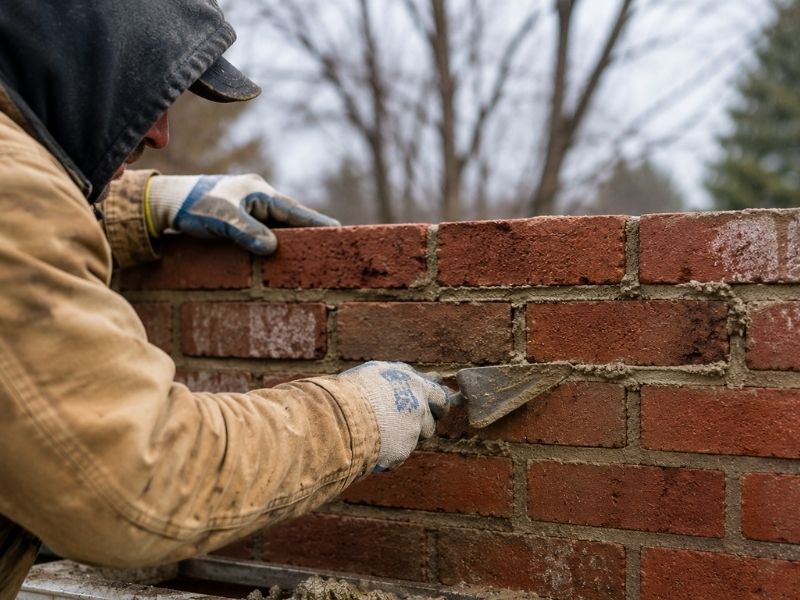
Mortar doesn’t care about your schedule. Brick repair is a chemistry job disguised as a construction job, and the weather is one of the ingredients. Pour water and cement together on the wrong day and you get a joint that looks fine for a year and then crumbles. The fix is simple: pick your window before you pick your crew.
Mortar is wet chemistry, not glue
Mortar hardens through a reaction called hydration, and that reaction needs water and time. It doesn’t dry like paint. If the water leaves too fast or freezes before the reaction finishes, the mortar never reaches full strength. Professional brick masonry depends on proper curing conditions to create durable mortar joints that last for years.
That’s the whole reason weather matters here. Every rule below traces back to one question: does the mortar keep the right amount of water long enough? Temperature, sun, wind and rain all push on that answer. Some push harder than you’d think.
The 40 degree line
Masonry specs treat 40 degrees Fahrenheit as the switch point. Below that ambient temperature, the industry standard (TMS 602, the masonry specification) calls for cold weather procedures. That means heated materials, protected work and covered walls for a set period after the work is done. Confirm the current edition and your local code adoption before you quote it.
Fresh mortar that freezes is the real danger. Water expands when it turns to ice, and that expansion breaks the young bonds inside the joint. The damage is invisible on day one and obvious in year three.
Cold weather work isn’t banned, it’s expensive
A good mason can work in the cold. They warm the sand, warm the mixing water and tent the wall with heat. All of that costs money and slows the crew down.
Ask for the cold weather plan in writing before you sign a winter contract. If the bid doesn’t mention heating or protection, the mason is planning to skip it. That’s a bid you should be suspicious of, not happy about.
Heat steals your water
Hot days do the opposite damage and get far less respect. Sun and dry air pull water out of the mortar before hydration finishes. The joint stiffens fast and looks set, but it’s weak inside.
The same masonry spec flags hot weather procedures above 100 degrees, and also above 90 degrees when wind speed passes 8 miles per hour. Wind is the part people miss. A breezy 92 degree afternoon can be harder on mortar than a still 100 degree one.
What a good crew does when it’s hot
They wet the brick before laying it, so the brick doesn’t drink the mortar dry. They shade the mixing area and the stockpile. They also work early and stop before the worst of the afternoon.
Watch for the shortcut: adding extra water to a stiffening batch. Retempering has limits, and a crew that keeps splashing the mud all day is weakening it. Ask about their cutoff time and their retempering rule.
Rain runs on a clock
Rain on a finished wall is fine. Rain on a wall that was pointed two hours ago is a problem. It washes cement out of the joint face and leaves a sandy, streaky surface that never gets hard.
Fresh work needs cover for a day or more, depending on temperature. A tarp is cheap. A rewash of the whole elevation is not.
Wet brick before repair causes a different headache. Saturated brick won’t take mortar well, and trapped water can push salts to the surface later. Most masons want the wall to dry out first, and rushing that is how you buy a white stain.
Season by season
Spring and fall are the good windows. Mild temperatures, moderate humidity and long enough days to work. Everyone knows this, which is why those calendars fill up first. Book early or take what’s left.
Summer work is fine with the right hours and the right prep. Winter work is fine with heat and protection. Both are doable, and both cost more per square foot than a April repair would have.
The bad windows are the swings. A day that hits 70 and drops to 28 overnight is worse than a steady cold week. Freeze-thaw cycling is what breaks masonry, and shoulder seasons in a mixed climate deliver plenty of it.
What to ask before you sign a weather-sensitive contract
- What ambient temperature range does this bid assume?
- If it’s below 40 degrees, what’s the heating and protection plan, and is it priced in?
- If it’s above 90, what’s the daily cutoff time and the retempering rule?
- How long will fresh joints be covered, and who supplies the cover?
- What happens to the schedule if rain lands within 24 hours of pointing?
- Is there a weather delay clause, and who eats the cost?
Run this list before the crew mobilizes. Every one of these questions is free right now. Each is a callback later.
Frequently Asked Questions
What is the best time of year for brick repair?
Spring and fall usually work best because temperatures are moderate and mortar cures at a steady pace. Summer and winter repairs are still possible with proper preparation and protection. The weather during the first 48 hours after the repair is often more important than the season itself.
Can brick repair be done in winter?
Yes. Brick repair can be completed during winter when proper cold-weather masonry practices are followed. Masons typically heat the mixing water and sand, then protect the finished work while the mortar cures. These extra precautions may increase both the cost and the project timeline.
Is it too hot to repair brick in summer?
Not necessarily, but high temperatures and strong winds can cause mortar to dry too quickly. Experienced masons reduce this risk by dampening the brick, protecting materials from direct sunlight, and adjusting work schedules during extreme heat.
How long does mortar need to stay dry after repair?
Fresh mortar should be protected from heavy rain for at least the first 24 hours and sometimes longer in cooler weather. Rain during the early curing period can weaken the mortar joints. Ask your mason how long the repaired area should remain covered.
Why do brick repairs fail after a year?
Improper curing is one of the most common causes. Mortar that freezes, dries too quickly, or becomes saturated with rain before it fully cures may never reach its intended strength. Over time, normal weather exposure and freeze-thaw cycles can cause those weakened joints to crack or deteriorate.
