Decorative brick walls can turn a plain front yard into something that actually looks intentional. Instead of grass running straight to the sidewalk, a low brick wall adds shape, structure, and a sense of permanence that most yards are missing.
Here is what a lot of homeowners overlook. A front yard without any defined edges tends to look flat, no matter how nice the landscaping is. A brick wall gives the eye something to rest on and ties the whole space together.
Decorative brick walls add structure, privacy, and curb appeal to a front yard, and they do it in a way that holds up for decades with almost no upkeep.
Why Brick Walls Change the Whole Feel of a Front Yard
A front yard without clear boundaries can feel open in a way that reads as unfinished rather than spacious. Adding a brick wall gives the space a defined edge, which makes the whole yard feel more designed and less like an afterthought.
Creating a Sense of Arrival
A low brick wall near the front walkway or property line signals where the private space begins. This small shift changes how a visitor experiences the approach to the house, giving the yard a clear starting point instead of one space blending into the next.
Adding Height Without Blocking the View
Unlike a tall privacy fence, a decorative brick wall can add visual interest at a lower height. This works well for homeowners who want structure in the yard without fully closing off the view from the street.
Popular Styles of Decorative Brick Walls
Not every brick wall needs to be a solid, uniform structure. Several styles work well for different yard layouts and home designs.
Low Border Walls Along Walkways
A short brick wall running alongside a front walkway adds definition without overwhelming the space. This style works especially well for smaller front yards where a taller wall would feel too heavy.
Brick Planter Walls
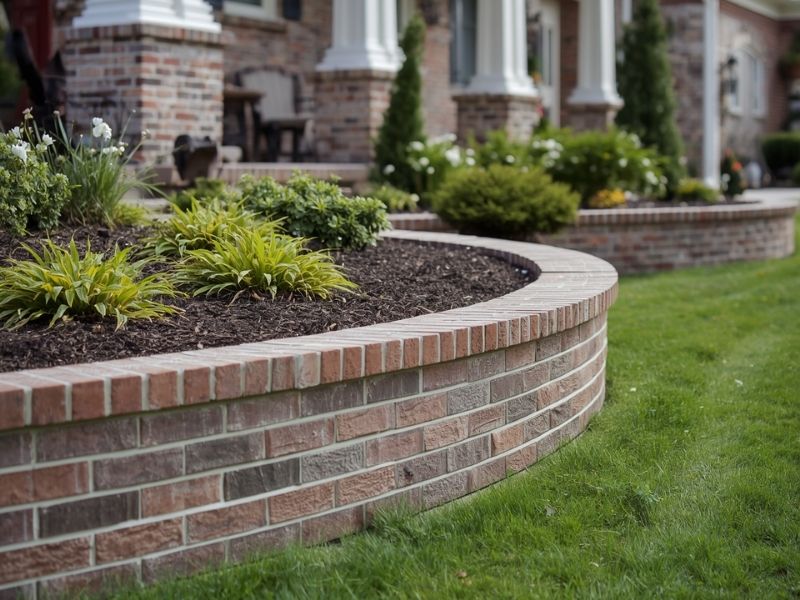
Brick walls built to double as raised planters combine structure with greenery. This style adds dimension to a flat yard and gives homeowners a defined space for flowers or shrubs without needing separate garden beds.
Accent Walls With Pattern Details
Some homeowners choose a brick pattern, like a herringbone or basketweave design, worked into a small accent wall near the entrance. This adds visual interest without requiring a large structure, and it works well as a focal point near a front door or mailbox area.
Seat Walls for Extra Function
A brick wall built at seat height serves two purposes at once. It defines the yard’s edge and gives people a place to sit during a gathering or while waiting at the front of the house.
How Brick Walls Add Privacy Without Full Enclosure
Many homeowners want some separation from the street without building a wall tall enough to block the whole yard from view. Decorative brick walls can strike that balance.
Partial Height Walls That Soften Street Noise
Even a wall two or three feet tall can reduce the feeling of being fully exposed to the street. It also helps soften some street noise, without requiring the homeowner to give up natural light or an open feel in the yard.
Combining Brick With Landscaping for More Coverage
Pairing a lower brick wall with shrubs or small trees behind it adds more privacy over time as the plants grow in. This combination gives homeowners more coverage without needing to build a taller, heavier wall from the start.
Why Brick Holds Up Better Than Other Yard Wall Materials
Wood fencing needs regular staining or replacement. Vinyl can crack in extreme heat. Brick handles both the sun and the occasional freeze that Fort Worth sees each winter without much trouble at all.
Low Maintenance Over Many Years
A brick wall does not need painting, staining, or yearly sealing. An occasional rinse to clear off dust and pollen is usually all it takes to keep it looking clean year after year.
Holding Color and Structure Through Weather Changes
Brick resists fading far better than painted wood or vinyl fencing. It also handles the swings between hot summers and occasional freezes without warping or cracking the way other materials can over time.
Design Choices That Affect How Long a Brick Wall Lasts
A decorative wall still needs the right construction details to stay solid for decades, not just to look good on day one.
A Proper Footing Below the Frost Line
Even a low decorative wall needs a solid footing set below the frost line for the area. Skipping this step risks shifting or cracking as the ground moves slightly through freeze and thaw cycles each winter.
Weep Holes for Drainage
Small gaps called weep holes, built into the base of a brick wall, let trapped water escape instead of building up behind the structure. Without them, water pressure can slowly push a wall out of alignment over time.
Matching Mortar to the Local Climate
The mortar mix used in a decorative wall needs to hold up to the specific temperature swings and moisture levels common in North Texas. Using the wrong mix can lead to cracking well before the wall reaches the end of its expected lifespan.
Questions to Ask Before Building a Decorative Brick Wall
A few clear questions before construction begins can prevent problems down the road.
- Will the footing be set below the local frost line?
- Does the design include weep holes for proper drainage?
- What brick and mortar combination is recommended for this specific yard and climate?
- Will the wall height and style match the overall look of the home’s exterior?
Getting clear answers before the project starts helps avoid a wall that needs repair or rebuilding within just a few years.
Frequently Asked Questions
How Do Decorative Brick Walls Improve Front Yard Curb Appeal?
Decorative brick walls add structure, definition, and visual interest to outdoor spaces. They create clear borders and design features that landscaping alone may not provide.
Can a Low Brick Wall Add Privacy to a Front Yard?
Yes. A low brick wall can create a greater sense of separation from the street while helping define the space. When combined with plants or landscaping, it can improve privacy and reduce outside distractions.
How Long Can a Decorative Brick Wall Last?
With proper construction, including a strong footing, quality mortar, and proper drainage, a decorative brick wall can last for decades with minimal maintenance.
Why Are Weep Holes Important in Brick Wall Construction?
Weep holes allow trapped moisture behind a brick wall to drain away. Without proper drainage, water buildup can weaken the wall structure and contribute to shifting or damage over time.
Are Decorative Brick Walls a Good Option for Small Front Yards?
Yes. Lower brick walls, planter walls, and landscape borders can add character and organization to smaller yards without making the space feel crowded or closed off.
