
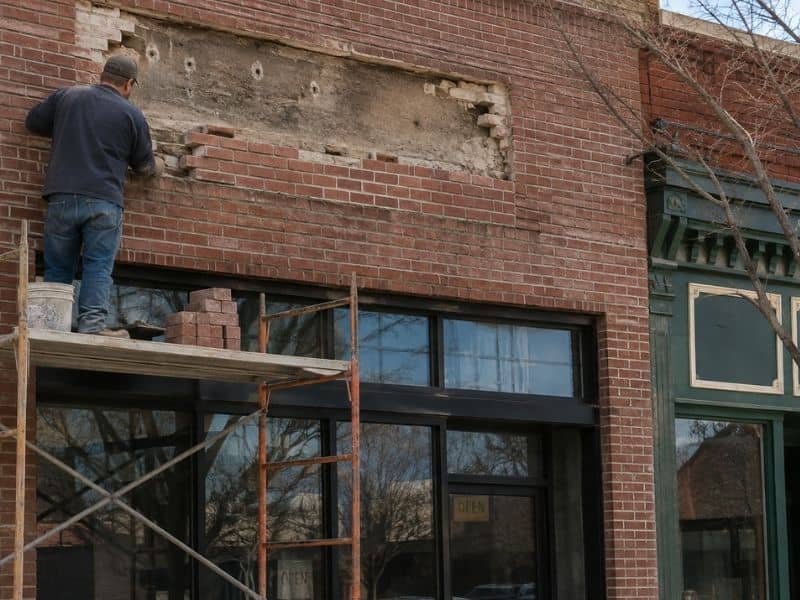
When an old storefront sign comes down, the wall behind it rarely looks clean. Brick masonry around that spot often shows holes, chipped edges or bare patches where the sign used to hang. It has plenty of older retail buildings with this exact problem, especially along its historic commercial streets. Patching one of these openings takes more care than most people expect. A rushed fix stands out, and it can even weaken the wall.
Identifying Damage Left by Removed Commercial Signs
Crews bolt, screw or anchor signs straight into brick. When they pull those signs off, the fasteners tear out small chunks of the surface. You’ll often find rows of drilled holes, cracked brick faces or spots where a whole brick pulled loose. A backlit box sign or a projecting blade sign might hide a full cut opening, so once it’s gone you can see raw block, old framing or exposed wall backing.
The damage also hides in less obvious places. Rust stains bleed from old steel anchors left in the wall. Sealant and adhesive pull away paint and the top layer of brick with them. Sometimes the sign covered years of weathering, so the patch area looks newer than everything around it. All of this shapes how the repair should go.
Assessing the Opening Before Brick Masonry Patching
A good patch starts with a close look, not a bag of mortar. Measure the opening first, both how wide it runs and how deep it goes. A shallow surface ding needs far less work than a hole that punches through to the backup wall. Check the brick around the edges too, since loose or cracked units near the gap have to come out before new brick goes in.
Before patching, a mason usually runs through a short list:
- The size and depth of the opening
- The condition of the surrounding brick
- Whether the old mortar is soft, crumbling or still sound
- If the sign sat near a lintel or another piece that holds weight above it
That last point matters most. Many storefront signs hang right over windows or doors, where a steel or brick lintel carries the load. If the opening reaches that support, someone needs to confirm it’s solid before closing things up. Older Fort Worth commercial guidelines lean toward keeping and repairing the original storefront materials, which makes this careful check even more worthwhile.
Matching Replacement Brick in Older Retail Facades
Filling a former sign opening drops new brick right into the middle of an old, weathered wall. That’s a tough spot to hide. Brick from decades ago rarely matches what’s sold today. Size is the first hurdle, because older brick often runs taller, shorter or thinner than modern units. Set a mismatched brick next to the original and the whole patch reads as a scar.
Color and texture come next. Old facades pick up soot, sun fading and a soft worn surface that fresh brick just doesn’t have. A dead-on factory color can still look wrong once it sits in daylight. Good masons hunt for salvaged brick from the same era, or they tumble and stain new brick to soften it. Orientation counts too, so the new brick should sit the same way the old ones do, with joints that line up across the patch. When the goal is to erase a former sign opening, these small choices decide whether the repair vanishes or draws the eye.
Rebuilding the Opening Without Creating New Masonry Stress
A patch has to move with the wall around it, not fight it. Brick walls expand and shrink a little with heat and cold, and a stiff repair jammed into a soft old wall tends to crack at the edges. To avoid that, masons tooth the new brick into the opening. They weave it into the existing courses instead of stacking a flat block inside the hole. This ties the patch to the wall so loads spread evenly.
Mortar choice plays a big role here. Masons usually laid old brick with soft lime mortar. Fill the gap with hard modern Portland mortar and the mismatch can crack the older brick as the wall shifts. A mortar close to the strength of the original keeps stress low. Fresh mortar should also match the color and joint style of the surrounding wall, so the repair blends instead of standing out. When it’s built right, the filled opening carries weight the same way the rest of the facade does.
Preserving the Character of Older Fort Worth Retail Buildings
Older storefronts tell you when they were built. The brick pattern, the sign band above the windows and the worn surface all carry that story. Yank down a sign and slap in a rough patch, and you chip away at that character. On a historic commercial block, that loss adds up fast across a street of similar buildings.
Fort Worth preservation guidance leans toward keeping historic signs where it can and repairing original facade features with care. Even when a sign has to come down, a thoughtful patch respects what the building was. Matching the brick, using compatible mortar and toothing the repair in cleanly all protect the look that gives these older retail buildings their pull. A wall that hides its former sign opening keeps the storefront honest to its age.
Frequently Asked Questions
Why can removing a commercial sign damage surrounding brick masonry?
Signs anchor into the wall with bolts and screws that grip the brick. Pulling them out rips away surface chunks and leaves drilled holes, cracked faces and loose bricks. Larger sign boxes can sit inside a cut opening, so taking them down exposes a bare backup wall.
How is an old sign opening prepared before brick masonry is patched?
A mason measures the width and depth, then checks the brick and mortar around the edges. He removes loose or damaged units and pulls out old rusted anchors. Cleaning the area back to sound material lets fresh brick and mortar bond well.
Can replacement bricks be matched to an older Fort Worth retail building?
Often yes, though it takes work. Salvaged brick from the same period gives the closest match for size, color and texture. When none turns up, masons tint or lightly age new brick and set it in the same orientation to blend the patch in.
Should a lintel be checked before patching a former sign opening?
Yes, especially when the sign sat above a window or door. A lintel carries the wall above that opening, so it has to stay sound. Confirming it’s solid before patching keeps the finished repair from settling or cracking later.
How can a patched sign opening blend with an older storefront facade?
Blending starts with matching brick, mortar and joints, then toothing the new brick into the old courses. Compatible mortar and careful color choices help the patch settle into the surface. Over time a well-built patch reads as part of the original wall.
