
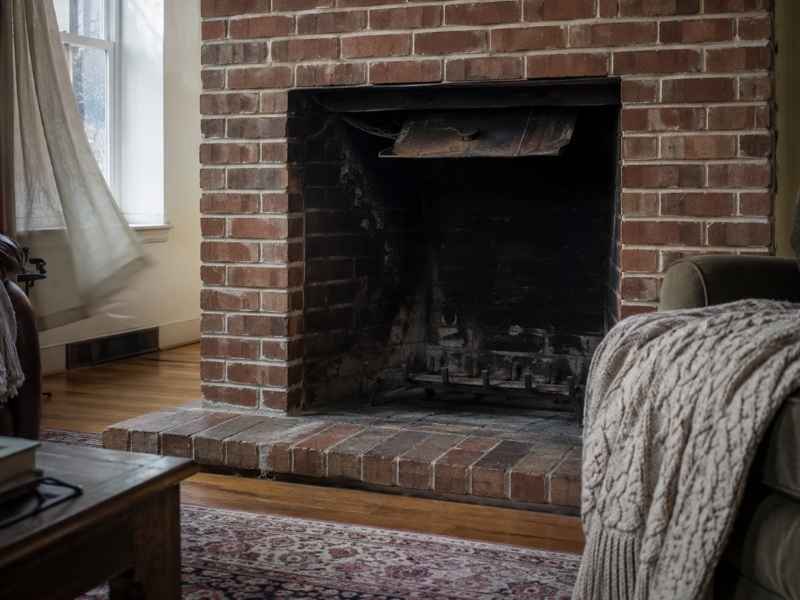
A brick fireplace can look solid and still let air slip through when it sits unused. The part doing the sealing is the damper, a metal plate up in the throat of the chimney. When it stops closing tight, you might feel cold air near the hearth on a chilly night or catch a faint chimney smell in the room.Winters bring sudden cold fronts, and a damper that no longer seals turns those temperature swings into a draft you can feel from the couch. The good news is that a failing damper leaves clues.
Signs a Brick Fireplace Damper Is No Longer Sealing
The clearest sign of a bad seal is air moving when it shouldn’t. A damper that closes tight should block the chimney like a lid on a jar. When the seal fails, outside air slips past the plate and into your living space. You might notice a steady draft near the fireplace, a room that never quite warms up or a musty chimney smell on windy days.
These are the signs that point to a damper seal problem:
- Cold air drifting from the fireplace when no fire is burning
- A spot near the hearth that stays cooler than the rest of the house
- A smoky or musty odor from the firebox, often stronger in damp weather
- A whistling or fluttering sound as air squeezes past the plate
- Heating and cooling bills that creep up without another clear cause
One of these alone might mean something minor. Several together usually point back to the damper, so the seal is the thing to check first.
How an Aging Damper Affects an Older Wood-Burning Fireplace
An older wood-burning fireplace puts its damper through years of heat, smoke and moisture, and the metal wears down. Most older fireplaces use a throat damper, a steel or cast iron plate that sits just above the firebox. Every fire heats that plate, and every cool-down lets it contract. After enough seasons, the metal can warp just enough that it no longer sits flat when closed.
Rust adds to the problem. Moisture drifts down the chimney and settles on the plate and hinge, and that rust roughens the edges where the damper should meet its frame. A pitted edge can’t form a clean seal. Years of soot and grit around the pivot make the plate catch or sit crooked.
Simple wear matters too. Opening and closing the damper hundreds of times loosens the hinge and bends the handle. Throat dampers rarely seal perfectly even when new, and age only widens those gaps. That’s why a fireplace that sealed fine years ago can feel drafty now.
Draft Problems Caused by Gaps Around the Damper
A gap of even a quarter inch around the damper can pull a surprising amount of air through the chimney. Warm air inside your home rises, and a chimney gives it a straight path up and out. When the damper won’t close all the way, that rising air escapes through the flue and drags cold outside air in to replace it. That’s why a leaky damper feels worse on cold, windy days.
The draft runs the other way in summer. Hot, damp Fort Worth air can slide down a gappy chimney and settle near the firebox, and that brings a musty smell into the room.
What makes this tricky is that the fireplace can look completely shut. The handle sits in the closed position and the plate looks down, yet air keeps moving. A seal that’s off by a small margin still leaves a real gap, and air always finds it. An open or leaky damper works like a window you forgot to close.
Checking Damper Movement Before Fireplace Use
You can learn a lot about a damper just by working it a few times with a flashlight in hand. Reach up into the throat, find the handle, and open the damper fully. It should swing open without grinding, sticking or dropping loose. A handle that flops, jams or needs a hard shove is telling you the mechanism is worn.
Next, close it and look at how the plate sits. With the fireplace cool and clean enough to see, shine the light up and check whether the plate rests flat against its frame all the way around. Daylight past the edges means the seal isn’t complete. A plate that sits crooked or wobbles when you nudge it points to warping or a bent hinge.
Do this only when the fireplace is cold and you haven’t burned anything for a while. These are simple looks, not repairs, and they help you decide whether the damper is fine or worth a closer inspection.
When a Damper Problem Calls for Professional Fireplace Evaluation
Some damper problems go past what a flashlight can settle. A plate that’s badly warped, an edge eaten by rust, a seized hinge or a handle that snapped off all call for a trained eye. A qualified chimney professional can judge whether the damper can still be sealed or whether the mechanism has reached the end of its life.
This matters more in an older wood-burning fireplace, where the damper has to fit an aging throat and flue. A pro checks how the plate meets its frame and whether corrosion has spread to parts you can’t see from below. When a throat damper can’t seal anymore, some older systems get a top-sealing damper at the chimney top, which closes with a rubber gasket for a much tighter fit.
The National Fire Protection Association standard, NFPA 211, recommends a professional inspection at least once a year, whether or not you use the fireplace much. A yearly check catches a failing damper before it grows into a bigger draft or moisture problem.
Frequently Asked Questions
Why won’t my brick fireplace damper close completely?
Age is usually behind it. The metal plate can warp after years of heating and cooling, while rust and soot around the edges and hinge keep it from seating flat. A bent handle or a worn hinge can also stop the plate from swinging fully shut. In older fireplaces, several of these often add up at once.
How can I tell if my fireplace damper is sealing properly?
Feel for air first. A cold draft near the hearth on a still, cold day, or a room that stays chilly no matter the thermostat, usually means the seal is leaking. A musty chimney smell in damp weather is another tip-off. You can also shine a flashlight at the closed plate and look for daylight around its edge.
Can a damaged damper cause drafts from an unused fireplace?
Yes, and it’s common. Even with no fire going, warm air in your home rises and slips out through any gap in the flue, and it pulls cold air in behind it. A damper that won’t close tight leaves exactly that gap. The draft can run downward too, so an unused fireplace can still feel like an open window.
Should an old fireplace damper be replaced or repaired?
The right move depends on the damper’s condition. A plate that’s just sticky or slightly out of line can often be cleaned, adjusted and resealed. One that’s heavily rusted, cracked or warped past sitting flat usually needs replacing. When a throat damper can’t hold a seal, some homeowners switch to a top-sealing damper for a tighter close.
Is it safe to use a wood-burning fireplace when the damper does not close properly?
A stuck damper is a bigger deal than a draft. If it won’t open fully, smoke and gases like carbon monoxide can back up into the room during a fire. Even a damper that opens fine but won’t seal points to worn parts a professional should check. Have the mechanism looked at before you keep burning.
