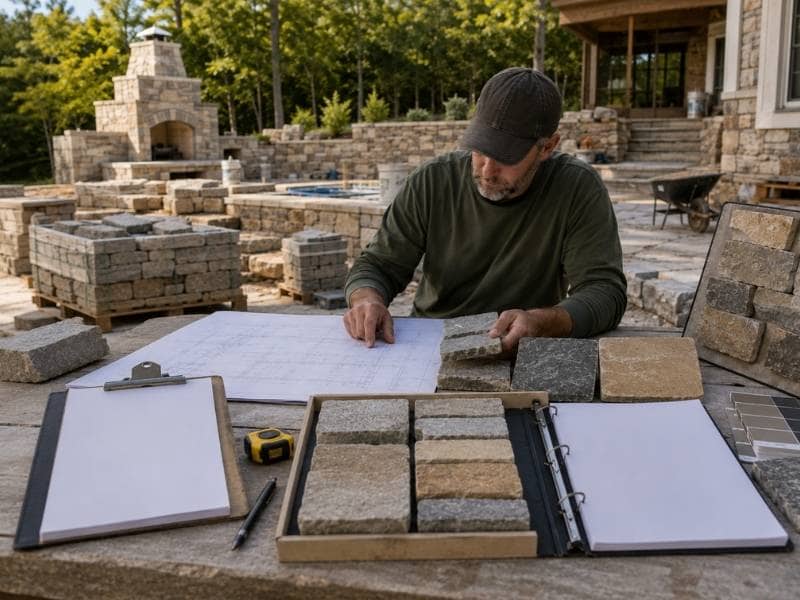
Material planning is one of the quietest parts of a stone job, and it prevents some of the biggest headaches. A good stone mason thinks about the material long before the first piece gets set. When a supply gap shows up halfway through a build, the fix usually means dropping in a stone that never matched the first choice. That kind of rushed swap shows in the finished wall or patio for years, and it’s rarely a change anyone would have picked on purpose. Careful planning at the start keeps the whole project on one clear material path from the first delivery to the last cut.
Where the Stone Goes Decides What Works
The spot where a stone lands changes what it has to do. A piece meant for a patio floor takes foot traffic and weather in a way a fireplace face never will. Wall veneer, steps, coping, and hearths each ask for their own thickness, finish, and strength. A stone that looks perfect on a sample board can still be wrong for the actual job once it goes into service.
A stone mason reads the use first and the look second. Steps carry weight and repeated wear, so they need a dense, thick surface with some grip underfoot. Coping caps a wall and throws off rain, so it needs the right shape and a finish that stands up to weather and frost. Load-bearing areas need stone that holds force without cracking under it.
Choosing by color alone skips the part that decides how long the work holds up. A soft, thin stone in a high-wear spot will chip and wear out fast, no matter how good it looked on the shelf. Matching the material to its real demands is the difference between a surface that ages well and one that starts failing in a season or two.
Confirm Stock and Lead Times Before You Commit
A catalog photo, a website image, or an old showroom sample can all be out of date. Color runs shift between batches. A product gets discontinued without much notice. What sat in the supplier’s yard last season might be gone today. Picking a stone from a picture and assuming it’s ready to ship is where a lot of delays begin.
Before anyone locks in an install date, the mason or supplier should check a few real facts. That means confirming the amount on hand, the current inventory count, the next restock date, and any wait time on a special order. Natural stone moves through supply chains in ways that change often, and imported or non-stock products can carry long lead times measured in weeks.
A short check up front keeps the schedule honest and keeps the crew from standing around later. It also gives everyone time to react if the numbers don’t line up. When a stone turns out to be short or slow, the owner can pick a backup while there’s still room to plan, instead of settling for whatever the yard has on a rushed afternoon.
Natural Stone Varies From Piece to Piece
Stone comes out of the ground, so no two pieces come out exactly alike. Color, veining, texture, and thickness all shift across a single pallet. A homeowner who expects every stone to copy one small chip is going to be surprised when the pallets arrive. That surprise often turns into a complaint that was never really a defect at all.
The smarter habit is to review the true range before signing off on anything. That can mean looking at several fresh samples, a range sample that shows the lightest and darkest ends, or a full pallet opened up in daylight. A small mockup on site helps even more, since it shows how the pieces read together rather than one at a time.
When people see the natural spread ahead of time, the delivered stone reads as normal instead of wrong. Setting that expectation early protects the mason too. A clear conversation about variation up front keeps a natural feature of the material from turning into a dispute after the wall is already up.
Count Every Piece the Job Needs
A finished order covers far more than the square footage of the main face. The mason has to add corners, caps, sills, step treads, and all the cuts those pieces require. Breakage and waste count too, since some stone cracks or gets trimmed away during setting. A quick guess at the front end often turns into a shortfall at the back end.
Running short partway through a build causes two problems at once. The work stops while more material comes in, and the new batch may not match the first pour of stone. A mason who maps the full piece count early, including the odd specialty units, keeps the color and texture even across the whole surface. That complete tally protects the timeline and the appearance at the same time.
Keep a Written Record of the Chosen Stone
Once everyone agrees on a stone, that choice belongs on paper. A clear record removes the guesswork if a question comes up mid-build. It also gives the property owner a real say if the material ever has to change for reasons outside anyone’s control.
A useful record spells out the details that define the exact product:
- The quarry or manufacturer and the product name
- The stone type, finish, and dimensions
- The approved range of natural variation
- The mortar color and any matching accessories
No substitute goes in without the owner’s approval. When a specified stone runs out, the proposed replacement gets weighed for fit, size, install needs, durability, appearance, cost, and delivery timing. A written baseline makes that comparison quick and fair instead of a rushed call on the job site. It turns a stressful moment into a simple side-by-side check, with the owner deciding rather than finding out after the fact.
