
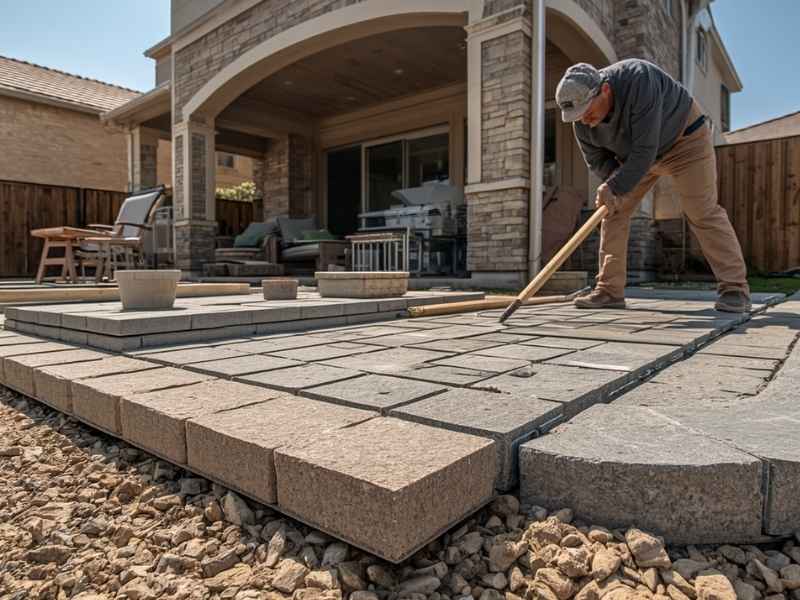
Stone pavers look simple to install. Lay them flat, tap them level, done. That mindset is exactly why so many stone paver patios and walkways in Fort Worth start shifting, sinking, or cracking within just a few years.
A flat surface today does not mean a stable surface five years from now. What happens below the stone matters far more than how level it looks on install day.
Stone pavers need a proper base, drainage, and edge support to hold up long term. Skip any of these, and even the best looking install will start failing sooner than it should.
Why Flat Alone Doesn’t Mean Stable
A paver that sits flat on the day it’s installed can still be sitting on loose soil, poor gravel compaction, or ground that hasn’t been graded for water runoff. None of that shows up right away.
Fort Worth’s clay-heavy soil expands when wet and shrinks when dry. That constant movement puts pressure on anything sitting on top of it. A stone that looked perfectly flat in June can tilt by the following spring once the ground beneath it swells and contracts through a few wet and dry cycles.
What’s Actually Holding the Stone in Place
A stone paver installation has several layers most people never think about, all working together to keep the surface stable.
A proper setup usually includes:
- A compacted base layer, often crushed gravel, tamped down in sections rather than all at once
- A leveling layer of sand or fine gravel that lets each stone settle evenly
- Edge restraints along the perimeter to stop the whole field of stones from spreading outward
- Proper grading so water moves away from the installation instead of pooling underneath
Skip any one of these layers and the whole system becomes vulnerable, even if the stones themselves are high quality.
How Fort Worth’s Clay Soil Changes the Equation
Not every region needs the same depth of base preparation. Fort Worth sits on soil known for heavy clay content, and clay behaves very differently than sandy or rocky ground.
This soil type:
- Swells significantly when it absorbs water after rain
- Shrinks and cracks during dry summer stretches
- Creates more ground movement than most other soil types common in Texas
A base that might work fine in a sandier region often isn’t deep enough here. A mason familiar with local soil conditions typically builds a thicker, better compacted base specifically to handle this movement.
Drainage Problems That Show Up Months Later
Water is one of the biggest reasons stone pavers fail early. It rarely causes an obvious problem on install day. The trouble shows up months or years later, after repeated cycles of water pooling and draining beneath the surface.
Watch for early warning signs:
- Water sitting on the surface for more than a few minutes after rain
- Soft or spongy footing when walking across a section
- Stones that have started tilting toward one particular corner
- Gaps opening up between stones near a low point in the yard
Catching these signs early usually means a smaller repair. Letting them sit often turns into replacing a much bigger section of the patio or walkway.
Why Edge Restraints Matter More Than People Expect
Stone pavers rely on pressure from neighboring stones to stay locked in place. Without a solid border holding the outer edge, that pressure has nowhere to push against, and the whole pattern can slowly drift apart.
Common edge restraint failures include:
- Plastic edging that has cracked or come loose over time
- Missing edge restraints entirely on older installations
- Edging that was installed too shallow to hold against ground movement
A failing edge restraint often shows up first as small gaps widening near the border, then spreading inward across the whole surface.
Choosing the Right Base Depth for the Project
Not every stone paver project needs the same base depth. A garden path handling only foot traffic needs less than a driveway supporting vehicle weight.
General guidelines to discuss with your mason:
- Walkways and garden paths typically need a shallower base than heavy-use areas
- Patios fall somewhere in the middle, depending on furniture weight and foot traffic
- Driveways need the deepest, most heavily compacted base to handle vehicle loads without shifting
Skipping this step to save on cost is one of the most common reasons a driveway-style installation fails years before it should.
Signs an Existing Stone Paver Installation Needs Attention
If you already have stone pavers and want to check their condition, look for:
- Any stone that rocks or wobbles under foot pressure
- Noticeable dips or waves across an otherwise flat section
- Widening gaps near the edges of the installation
- Standing water that takes longer to drain than it used to
Spotting these early gives you options. A mason can often lift and reset a small section rather than rebuilding the entire surface.
Questions to Ask Before a New Stone Paver Installation
- How deep will the base go for this specific project, walkway, patio, or driveway?
- How will you handle drainage and grading around the installation?
- What type of edge restraint will you use, and how is it installed?
- Given Fort Worth’s clay soil, will the base need any extra compaction or depth?
- What’s the expected lifespan of this installation with proper base prep?
Frequently Asked Questions
Why do stone pavers shift even when they were installed level?
A level surface on installation day does not always mean the base underneath is stable. Ground movement caused by clay soil, poor drainage, or inadequate compaction can lead to shifting over time.
How deep should the base be for a stone paver patio in Fort Worth?
The required base depth depends on the intended use of the patio and the site’s soil conditions. Because Fort Worth has expansive clay soils, a deeper, well-compacted base is often recommended for long-term stability.
Can I repair a small section of shifted stone pavers without replacing the entire patio?
Yes. In many cases, a mason can lift the affected pavers, correct the underlying base problem, and reinstall the stones without disturbing the rest of the patio, provided the issue is limited to one area.
Do stone pavers require a different base than brick pavers?
Both installations follow similar base preparation principles. However, because natural stone pavers often vary in size and thickness, the leveling layer may require additional adjustment to achieve a stable, even surface.
How can I tell if my stone paver patio has a drainage problem?
Common signs include standing water after rain, soft or uneven areas underfoot, and pavers that begin to tilt or settle toward one section. These issues often indicate water is collecting beneath the surface instead of draining away properly.
