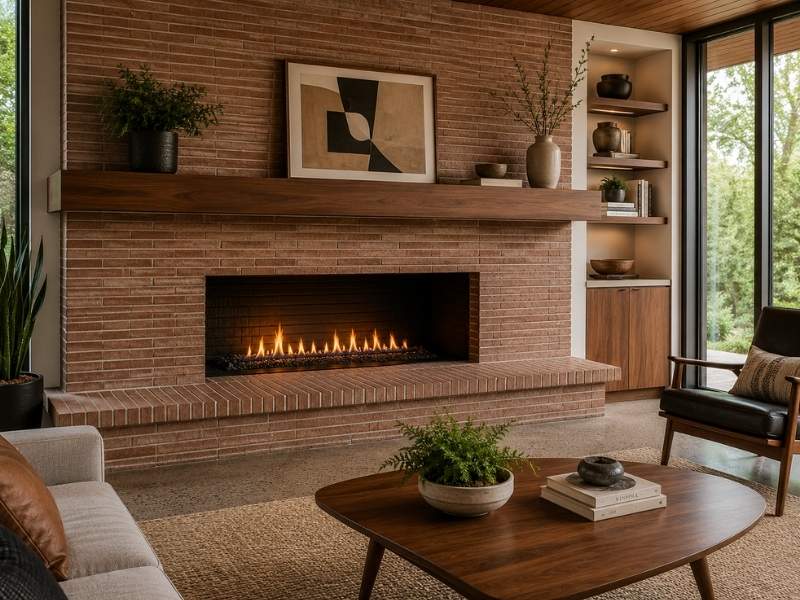
A brick hearth often gets judged on the big picture first. People look at the pattern, the color, the overall shape. But the small details are what make one hearth look custom and another look like it came off a template. Brick hearth details are where a good hearth becomes a great one.
Why the Small Details on a Brick Hearth Matter
Most of the decisions that shape a hearth happen at a fairly broad level. Which brick, which pattern, how big the hearth should be. Those choices matter, but they leave a lot of room for smaller decisions. Those small choices can change the whole feel of the final result.
Joint style, edge shape, and small add-ons rarely get much notice during planning. Yet these are often the details a homeowner sees every single day, long after the bigger design choices have faded into the background.
Mortar Joint Styles That Change the Look
The mortar joints between bricks do more work than most people realize. A concave joint, pressed into a slight curve, creates soft shadow lines that give a hearth a classic, old-world look. A flush joint sits level with the brick face. It creates a cleaner, more modern feel by removing that shadow entirely.
A raked joint takes this further. The mortar gets cut back from the brick face, creating a deeper shadow line and a rougher surface. This style tends to suit rustic or farmhouse rooms, where a bit of visible texture fits the rest of the space.
Weathered joints slope slightly outward at the bottom. This helps shed water and dust more easily on hearths that see more daily wear. Choosing the right joint style isn’t just about looks. It also affects how well a hearth holds up and how easy it is to keep clean over time.
Edge Profiles That Add a Custom Touch
Most bricks come with a plain, square edge, but that isn’t the only option for a hearth. A bullnose edge rounds off the corner. This softens the look and lowers the risk of a sharp bump for anyone walking close by.
A chamfered edge cuts the corner at an angle instead of rounding it. This gives a hearth a more geometric, modern look while still softening the sharp edge. Either option works well on a hearth platform that reaches into the room, where people are more likely to brush against the edge.
These edge choices matter more on hearths that sit low to the ground or reach further into a living space. A sharp, square edge on a raised platform can turn into a repeated stubbed toe over the years. A softened edge blends safety with style in a way that doesn’t call attention to itself.
Hearth Extensions and Wings Add Function
A hearth doesn’t have to stop right at the edges of the fireplace opening. Many hearths stretch into wings on either side. This widens the brick surface and creates a broader base for the fireplace to sit within.
These wings often serve a real job beyond looks. A wider hearth gives more room from nearby furniture, which matters for fire safety. It also creates more surface for setting down firewood, tools, or decor without crowding the fireplace opening itself.
Hearth wings also give a designer more room to try new brick detail. The wider surface offers space for a different mortar joint, a contrasting brick color, or a subtle border that ties the wings back to the main hearth surface.
Pairing Trim and Mantel Materials With Brick Details
The materials used around a hearth, especially the mantel and any trim, need to work with the brick details rather than fight against them. A heavily textured raked joint pairs well with a rustic wood mantel. A clean flush joint tends to suit a simpler, more streamlined mantel design.
Metal trim pieces, like a black steel surround or a thin metal ledge along the hearth edge, can highlight the brick’s texture through contrast rather than blending in. This kind of pairing draws attention to the brickwork itself instead of letting it fade into the background.
Getting this pairing right often comes down to matching warmth and formality. A warm-toned brick with a raked joint suits a wood mantel and casual furniture. A cooler-toned brick with flush joints tends to suit sleeker trim and a more formal room.
None of these choices happen alone either. A wing built with a raked joint should usually carry that same joint style across the rest of the hearth. That way, the whole surface reads as one connected piece instead of a patchwork of unrelated parts.
Frequently Asked Questions
What mortar joint style works best for a brick hearth?
A concave joint gives a hearth a classic, old-world look with soft shadow lines. A raked joint adds more texture for a rustic feel. Flush joints create the cleanest, most modern look by removing the shadow line entirely.
What is a hearth extension or wing?
A hearth extension, or wing, is extra brick surface built out to either side of the main fireplace opening. It widens the hearth, adding room from nearby furniture and extra space for tools, firewood, or decor.
Can hearth edge details affect safety clearance?
Yes. A rounded or angled edge on a raised hearth platform lowers the risk of injury from bumping into a sharp corner. This matters most on hearths that reach into high-traffic areas of a room.
Does trim material affect how a brick hearth looks?
Yes. Warm, textured brick details tend to pair well with wood trim, while cleaner, flush brick details often suit metal or simpler trim styles. Matching the tone and texture keeps the whole fireplace area feeling steady and whole.
Are custom hearth details expensive to add?
Not usually. Choices like joint style and edge shape get decided during construction and rarely add much cost, since they mostly involve skill rather than extra materials.
