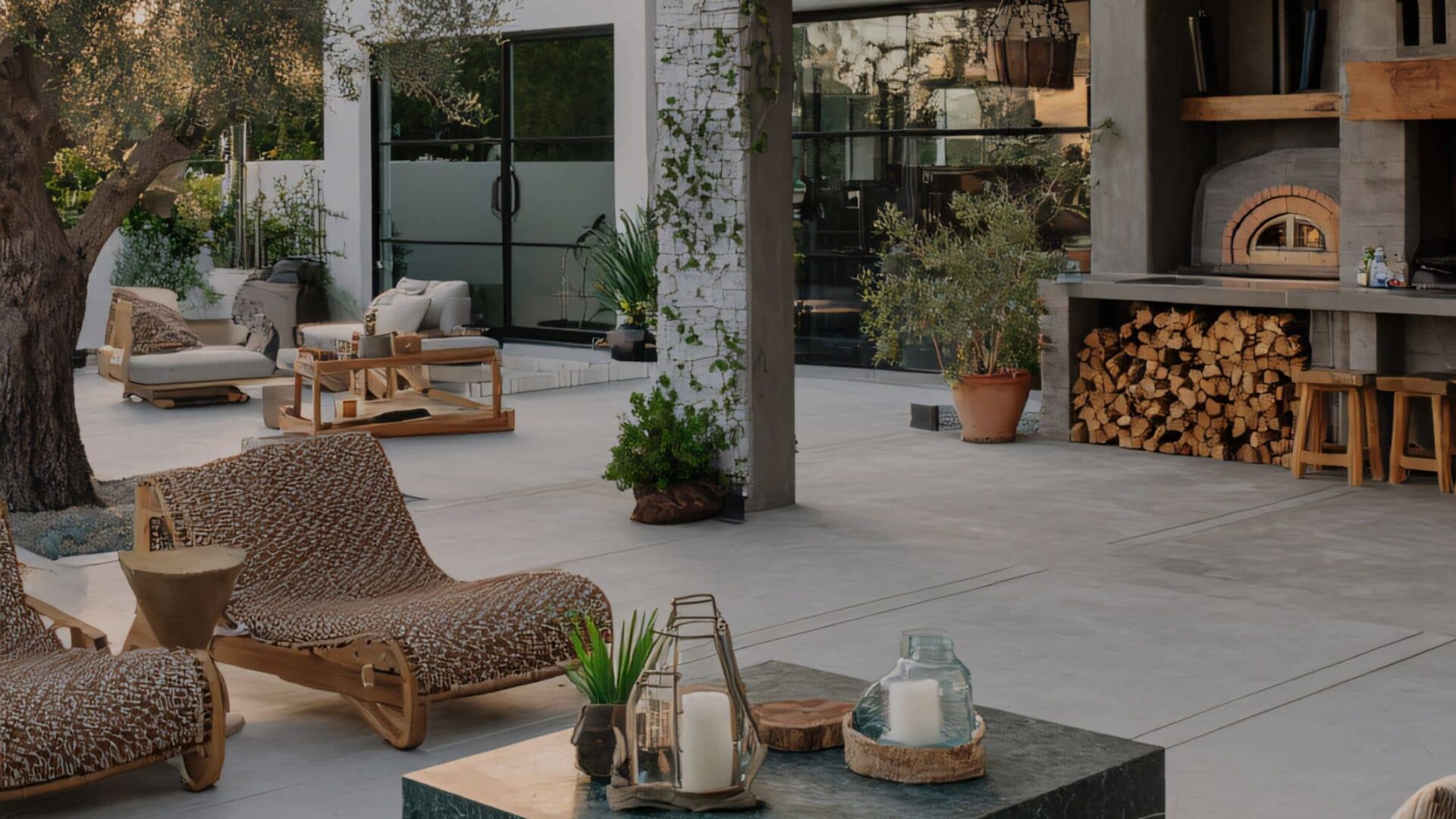
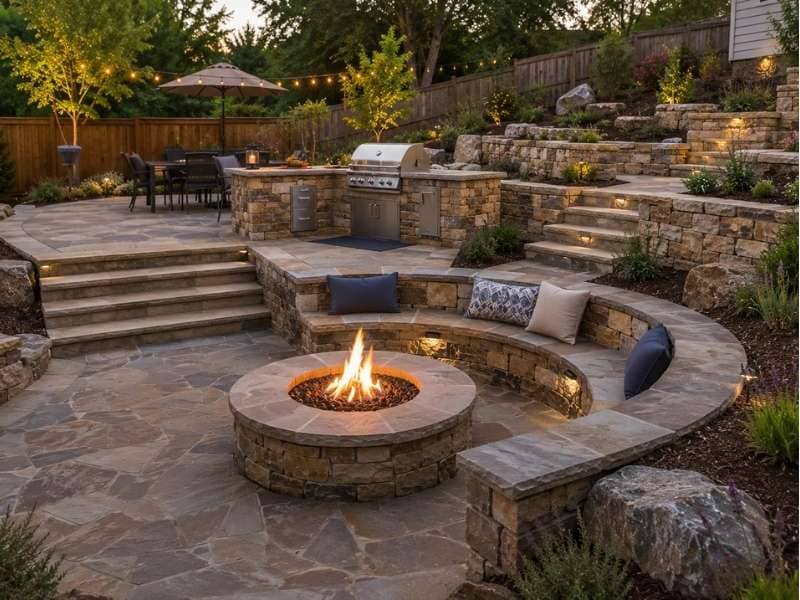
A backyard gets used differently than a front yard. It’s where people cook outside, sit around a fire, grow things, and spend real time with family and friends. That kind of daily use needs more than grass and a few potted plants. A stone mason brings the skills and materials to turn an ordinary backyard into a space that works hard and looks good doing it. Natural stone holds up to heavy outdoor use, handles weather without deteriorating, and fits naturally into almost any yard layout.
According to the American Society of Landscape Architects, built-in outdoor features like fire pits, retaining walls, and outdoor kitchens are among the most requested backyard improvements by homeowners. Stone is the material most commonly specified for all three.
Build a Retaining Wall That Does Real Work
A sloped backyard loses usable space fast. Water runs downhill, soil erodes, and large sections of the yard become too steep to use comfortably. A stone retaining wall solves all of that at once.
A retaining wall holds back soil and creates flat, level areas on a sloped lot. Those flat areas become usable space for gardens, seating, or lawn. The wall itself also controls where water flows during heavy rain, which protects both the yard and the home’s foundation from erosion damage.
Stone retaining walls are among the most durable options available. A properly built stone wall can hold its position for decades without significant maintenance. A stone mason calculates the right wall height, thickness, and drainage setup based on the specific slope and soil conditions in the yard. Getting those details right from the start is what keeps the wall stable over time.
Add a Fire Pit Area People Actually Gather Around
A fire pit changes how a backyard feels in the evening. It draws people together, extends the time spent outside into cooler months, and gives the yard a clear focal point. Stone is the most practical material for building one because it handles high heat without cracking or deteriorating the way other materials can.
A stone mason builds more than just the fire pit itself. The area around it matters just as much. A low circular seating wall around the fire pit gives guests somewhere to sit without dragging chairs across the yard every time. The ground surface between the seating wall and the pit should be level and stable, usually flagstone or compacted gravel, so nobody is shifting around on uneven ground.
The layout of the fire pit area affects how comfortable and safe it feels. A mason plans the spacing between the pit and the seating wall carefully, typically 6 to 8 feet from the fire to the inner edge of the seating, so heat stays comfortable rather than overwhelming.
Create an Outdoor Kitchen Foundation
An outdoor kitchen needs a foundation that handles heat, moisture, and the weight of appliances without shifting or cracking over time. Stone is one of the few materials that meets all three demands reliably.
A stone mason builds the base structure, countertop surround, and side walls that hold a built-in grill, side burners, and storage in place. Stone countertops resist heat from cooking surfaces and don’t absorb stains or odors the way wood or tile grout can. The base walls, built from concrete block faced with natural stone, give the whole structure a clean, permanent look that holds up through years of outdoor use.
An outdoor kitchen built on a proper stone foundation is a long-term addition to the property. Unlike freestanding grills or prefab outdoor kitchen kits, a stone structure doesn’t rust, warp, or need replacement after a few seasons.
Use Stone Steps to Connect Different Levels
A backyard with more than one level needs safe, comfortable transitions between them. Worn dirt paths, loose gravel, or uneven timber steps all become hazards over time, especially when the ground is wet.
Stone steps solve the problem permanently. A stone mason sets each step into a compacted base so it stays level and stable under foot traffic and through seasonal ground movement. The right step dimensions matter too. A comfortable outdoor step typically runs 12 to 14 inches deep with a rise of 5 to 7 inches. Steps built to those proportions feel natural to walk and don’t cause people to shorten or lengthen their stride awkwardly.
Stone steps also connect visually to other stone features in the yard, tying the whole backyard design together rather than looking like a separate afterthought.
Frame the Yard with Stone Borders and Garden Walls
Stone borders and low garden walls do two things at once. They organize the backyard into clear zones and give planting beds a clean, finished edge that stays put through rain and foot traffic.
A low stone wall around a raised planting bed keeps soil in place, makes the bed easier to maintain, and adds height variation to a flat yard. Stone edging along a lawn border separates grass from garden cleanly without the plastic or metal edging strips that shift and buckle over time.
These features don’t require major construction. A mason can add stone borders and low walls around existing beds and lawn areas without disrupting the rest of the yard. The result is a backyard that looks intentional and well-organized rather than one that just happened over time.
Frequently Asked Questions
What backyard features can a stone mason build?
A stone mason builds retaining walls, fire pit surrounds, outdoor kitchen foundations, stone steps, garden walls, raised planting beds, and stone edging. These features work individually or together as part of a complete backyard design.
Can a stone mason work on a sloped yard?
Yes. Sloped yards are actually where stone masonry adds the most value. Retaining walls create flat, usable space on slopes that would otherwise be difficult to use. A mason assesses the slope, soil type, and drainage before recommending the right wall design and dimensions.
How long does a backyard stone project take to complete?
Smaller projects like garden borders or a fire pit area typically take two to four days. A retaining wall or outdoor kitchen foundation can take one to two weeks depending on the size and site preparation required. Weather and material delivery can also affect the timeline.
Does backyard stonework need a permit?
It depends on the project and local building codes. Retaining walls over a certain height, typically 3 to 4 feet, usually require a permit. Outdoor kitchens with gas connections almost always do. A licensed stone mason familiar with local requirements can advise on what approvals are needed before work begins.
