A fireplace often sits unused for most of the year. Then it becomes the center of the house once the weather turns cold. Small fireplace changes can shift how that space gets used the rest of the year too, not just during the coldest months.
Small Updates Can Reshape How a Fireplace Gets Used
Most homeowners think of a fireplace as fixed. They think it stays the same until it gets replaced. That’s rarely true anymore. A handful of updates can turn a fireplace from a seasonal feature into a space the household uses all year.
These changes don’t always mean a full renovation. Sometimes one update, like a more efficient insert or a bit of added storage, changes how often a family gathers around the fireplace. Small shifts like these tend to add up over time.
Swapping to a More Efficient Insert
An older wood fireplace often loses more heat than it makes. A lot of warm air escapes straight up the chimney. Swapping in a modern insert changes that. Gas inserts and high-efficiency wood inserts both hold heat in the room instead of losing it. A fireplace can then help warm a space, not just decorate it.
Gas inserts also cut down on daily hassle. There’s no wood to haul. There’s no ash to clean. Nobody has to build a new fire every time someone wants warmth. For a family that uses the fireplace often, that ease alone can be worth the upgrade.
An insert swap also tends to improve safety. Older fireplaces can grow cracks or buildup inside the flue that go unnoticed for years. A new insert usually comes with an inspection. That check catches problems before they grow bigger and cost more.
Some homeowners hold off on this kind of swap, thinking it costs too much for what it’s worth. But the ongoing savings on heating bills, plus fewer repair calls down the road, often make the upfront cost worth it within a few years.
Updating the Mantel and Surround for a Fresh Look
The mantel and surround shape how a fireplace fits the room more than almost any other single feature. A dated mantel can make an updated living room feel stuck in an earlier decade, even when nothing else in the space has changed.
Updating a mantel doesn’t require touching the firebox itself. A new mantel shelf, a fresh coat of paint, or a different surround material can shift the whole feel of the room. It does this without the cost or mess of a full rebuild. That makes it one of the easier fireplace changes to take on.
Surround materials have grown well past the old choices too. Tile, stone, and even plaster finishes now show up around fireplaces alongside more classic options. Picking a surround that matches the rest of the room’s style keeps the fireplace from feeling cut off from everything around it.
Adding Storage and Built-Ins Around the Fireplace
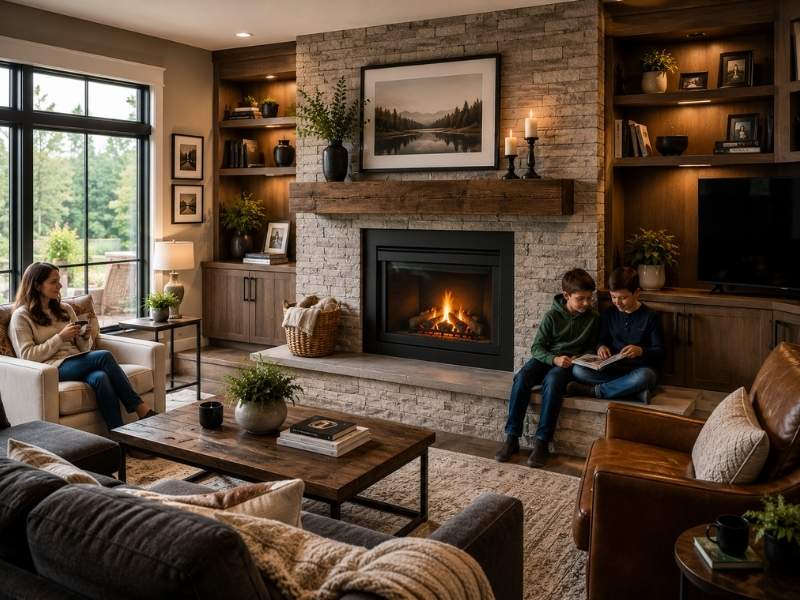
A fireplace wall often has unused space on either side that could work harder for the household. Built-in shelves or cabinets added around a fireplace turn dead space into storage or display room. This doesn’t take up any extra floor space elsewhere in the room.
This kind of addition works well in smaller homes, where every bit of storage counts. Built-ins next to a fireplace can hold books, media gear, or family photos. This gives the room a finished look while solving a real storage need at the same time.
Adding built-ins also tends to make a fireplace feel like a lasting part of the room’s design, rather than a stand-alone feature. That shift alone can make the whole living space feel more pulled together.
Zone Heating Changes That Cut Energy Costs
A fireplace that only warms the room it sits in isn’t doing much for the rest of the house. Some fireplace changes focus on stretching that heat further. They use it to cut heating costs in nearby rooms instead of leaning only on a furnace or central system.
Zone heating changes help push warm air further into a home. Adding a blower to an insert is one option. Sealing an older firebox better is another. A family that uses this kind of setup during cooler months can lower their overall heating bill. The fireplace is doing real work, not just adding a nice glow.
These changes tend to pay for themselves over a few heating seasons. This holds true in homes where the living room or den sees heavy daily use during colder months. A fireplace built to actually add heat becomes part of the home’s daily routine, not just a weekend feature.
Taken together, these updates show how much a fireplace can offer beyond looks. A well planned set of changes turns a once-a-year feature into a space the whole household leans on through most of the colder half of the year.
Frequently Asked Questions
What counts as a fireplace change?
A fireplace change is any update made to a fireplace or the area around it. This can range from a new insert to a mantel refresh to added storage nearby. These changes can improve how a fireplace looks, works, or performs day to day.
Does upgrading a fireplace insert save money?
In most cases, yes. Modern inserts hold heat in the room better than older, open fireplaces. This can lower a household’s overall heating costs during the months a fireplace gets regular use.
Can a fireplace mantel be updated without a full renovation?
Yes. A new mantel shelf, a paint refresh, or a new surround material can update a fireplace’s look without touching the firebox itself. This makes it one of the simpler updates a homeowner can take on.
Are built-ins around a fireplace a good use of space?
Yes. Built-in shelves or cabinets next to a fireplace turn unused wall space into storage or display area. This works well in homes where extra storage space is tight.
Do fireplace changes affect a home’s daily energy use?
Yes. Updates like adding a blower or sealing an insert better help push warm air further into a home. This can lower how much a household relies on a furnace or central heating system during colder months.
