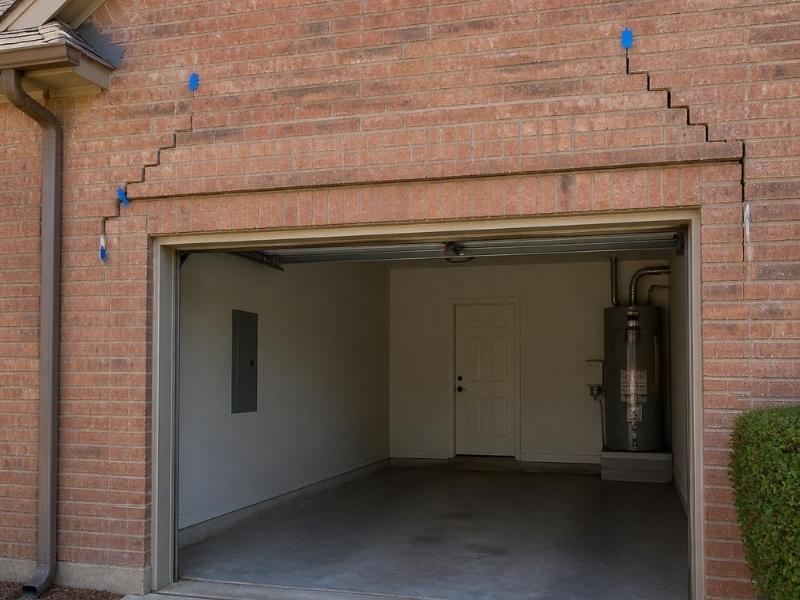
A crack over the garage door looks small at first. Then it grows, and the brick starts to step or bulge. Good brick repair above a garage opening starts with one thing, and that is reading the crack. The shape and the spot tell you what went wrong. For developers working on Fort Worth homes, where clay soil swells and shrinks with the seasons and the garage is the widest hole in the wall, that spot cracks before anywhere else. Fill it too soon and it comes right back. Read it first, and you fix the real problem once.
Why the Brick Above a Garage Door Cracks First
The garage door is the widest opening in most walls. Brick cannot span that gap on its own. It rests on a beam called a lintel that carries the load across the top. All that weight funnels down to the two top corners of the opening. So when the wall moves, or the lintel gives, the stress lands right there. That is why cracks show up over the garage long before the rest of the wall says a word.
Read the Crack Pattern Before You Fix Anything
The crack is a clue, and its shape points to the cause. Look at where it starts, which way it runs, and whether the brick has moved.
- Diagonal cracks from the top corners of the opening often mean the lintel is sagging or the steel behind it is rusting and swelling.
- A flat crack along the lintel line, with the brick above pushed up or out, points to a rusting steel lintel as the rust swells and lifts the course.
- Stair-step cracks climbing through the mortar from a corner usually mean the ground under the opening is moving.
- A straight up-and-down crack over the middle of the opening can mean the lintel is too weak or barely resting on the wall at its ends.
- Cracks that open in one season and close in another point to clay soil swelling when wet and shrinking when dry.
Snap a few photos over a couple of months. A crack that keeps growing is telling you the cause is still active.
The Two Things Usually Behind It
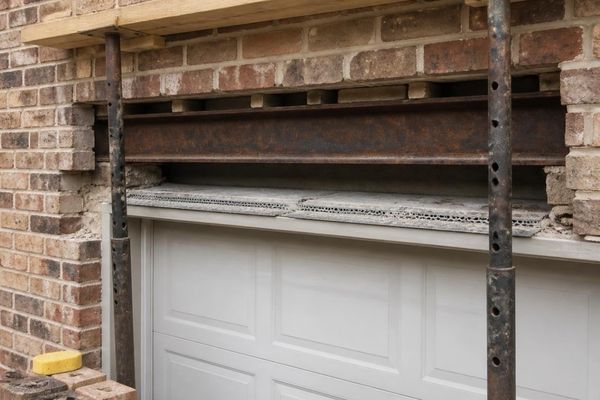
Most cracks over a garage door trace back to a bad lintel or moving ground. Sorting out which one saves you from the wrong repair.
A steel lintel fails in a few ways. It can sag if it was too small or the span was too long. It can rust, and this is the sneaky one. Water gets past bad flashing or blocked weep holes, sits on the steel, and the steel rusts. Rust takes up far more room than the metal it came from, up to several times as much. That swelling steel pushes the brick up and out, and cracks the joints. The ends of the lintel also need enough wall to rest on. Too little, and it slips or sags.
Ground movement is the other cause. Clay soil holds water, swells up, then shrinks as it dries. That lifts and drops the foundation over the year. The garage opening is wide and weak, so it cracks first. This kind of movement needs a look at the foundation, not just the brick.
What to Do About It
Never just fill the crack and walk away. Find the cause and stop it first, or you will pay twice. Start with water, since water drives most lintel rust. Check the flashing above the lintel, clear the weep holes, and aim downspouts away from the wall. Then deal with the lintel itself. A rusted or sagging lintel needs to come out and get replaced with one sized right and set with enough bearing on each end. That job needs the brick above held up with temporary support while the old steel comes out. If the cause is ground movement, get the foundation checked before any brick work.
Wide garage spans carry a lot of weight. Anything over about twelve feet should be sized by a structural engineer, not guessed. Once the cause is fixed and the wall is stable, then you repoint the joints or replace the cracked brick to match.
One safety note. Loose, bulging, or dropping brick over an opening is a falling hazard. Keep people and cars clear, and call a mason or engineer. Do not knock
brick out from over a door without proper support, because the whole course above can come down.
Frequently Asked Questions
Are cracks above my garage door serious?
They can be. A thin hairline may be simply settling. A crack that widens, steps, or comes with pushed-out or sagging brick usually means the lintel or the ground is moving. Get those looked at soon, since the brick above an opening can loosen and fall.
What makes the brick over a garage door crack in the first place?
Two causes lead the list. The steel beam over the door can rust and swell or sag under the load, which cracks the brick around it. The ground can also shift, since clay soil swells and shrinks with moisture and drops the widest part of the wall first.
Can I just caulk the crack or add new mortar?
Only after the cause is fixed. Sealing a crack while the lintel still rusts or the soil still moves just hides the problem for a few months. The crack returns, often wider. Stop the water or the movement first, then patch.
Why does the crack keep coming back after every repair?
Because the repair treated the crack and not the cause. If water still reaches the steel, or the foundation still lifts and drops, the same stress reopens the same crack. A lasting fix removes the source, whether that is a rusted lintel or a moving base.
Do I need an engineer or just a mason?
That comes down to the cause and the span. A mason can handle flashing, repointing, and many lintel swaps. Wide garage openings and any sign of foundation movement call for a structural engineer to size the beam or check the base before repairs.
