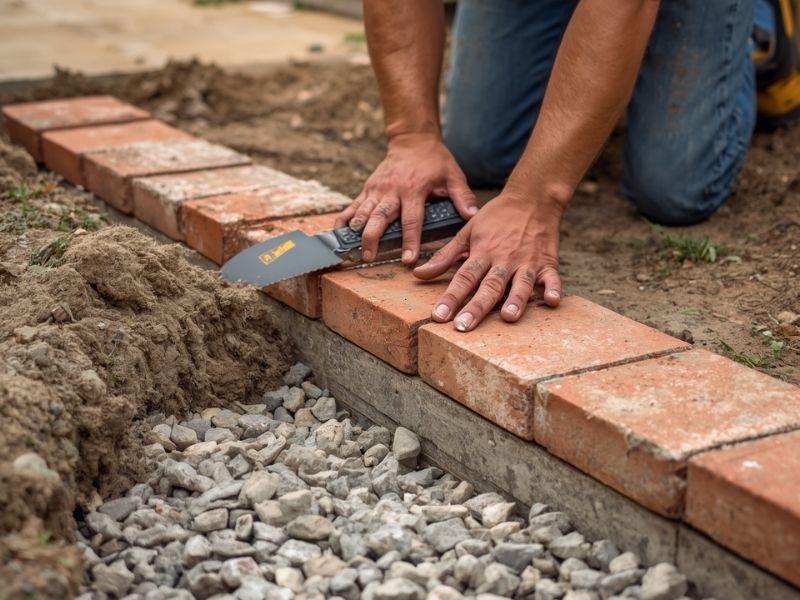
A brick walkway that shifts and sinks a few years after installation is one of the most common complaints homeowners bring to a mason. The bricks themselves are rarely the problem. What sits underneath them almost always is.
Here is what most people do not realize. A brick walkway is only as stable as the ground it sits on. Skip the right prep work, and even the best bricks will heave, sink, or spread apart within a few seasons.
Brick walkways shift because of what happens below the surface, not because of the bricks themselves. Proper base prep and edge support are what keep a walkway flat and stable for years.
What Actually Causes a Brick Walkway to Shift
Most shifting problems trace back to the ground underneath the bricks, not the bricks on top. Once you understand what is happening below the surface, the fixes make a lot more sense.
Soil That Was Never Properly Compacted
If the soil under a walkway was not compacted before installation, it settles unevenly over time. Foot traffic and rain both push loose soil down at different rates in different spots. This creates the dips and humps that show up in older walkways.
Water Getting Trapped Underneath
Water that collects under a walkway instead of draining away causes the ground below to soften. Soft ground shifts easily under weight. Over time, this creates low spots where water keeps collecting, making the problem worse each season.
Clay Soil That Expands and Contracts
North Texas soil often has a high clay content, and clay reacts strongly to moisture changes. It expands when wet and shrinks when dry. A walkway built without accounting for this movement will crack, heave, or separate as the ground beneath it swells and shrinks throughout the year.
The Base Layer That Prevents Most Shifting Problems
The base layer under a brick walkway does more work than most people expect. Getting this step right prevents the majority of shifting issues before they start.
Why a Gravel Base Matters More Than the Bricks
A properly compacted gravel base gives water somewhere to go instead of pooling under the bricks. It also creates a stable, even surface for the bricks to sit on, instead of resting directly on soil that will shift with the seasons.
How Deep the Base Needs to Be
A shallow base cannot handle the weight of foot traffic or the pressure from expanding clay soil. A base that is too thin will compact further over time, causing the bricks above it to sink unevenly.
Compacting the Base in Layers
Adding all the gravel at once and compacting it a single time often leaves weak spots buried inside the base. Compacting in layers, a few inches at a time, creates a denser and more even base overall.
Why Edge Restraints Keep a Walkway From Spreading
A walkway does not just sink. It can also spread outward at the edges over time, which throws off the pattern and creates gaps between bricks.
What Happens Without a Solid Edge
Without a rigid edge restraint, bricks along the border have nothing holding them in place. Foot traffic and soil movement slowly push them outward, which then creates gaps that widen across the whole walkway.
Metal or Plastic Edging Versus a Mortared Border
Rigid edging, whether metal, plastic, or a mortared brick border, locks the outer bricks in place. This keeps the entire pattern tight, even as the ground beneath continues to shift slightly with the seasons.
How Fort Worth Weather Adds to the Problem
Fort Worth sees hot, dry summers followed by periods of heavy rain, and this swing puts extra stress on any hardscape project.
Long Dry Spells Followed by Heavy Rain
Extended dry periods shrink clay soil, leaving small gaps underneath a walkway. When heavy rain follows, water fills those gaps and the soil expands again. This repeated cycle of shrinking and swelling is one of the biggest reasons walkways installed without proper prep fail within just a few years.
Occasional Freeze and Thaw Damage
While freezing weather is less frequent in Fort Worth than farther north, a handful of hard freezes each winter can still cause moisture trapped in the base to expand and contract. Over several years, this adds up and contributes to slow shifting.
Questions to Ask Before Installing a Brick Walkway
A few direct questions before construction starts can save a lot of frustration later.
- How deep will the gravel base be, and will it be compacted in layers?
- What type of edge restraint will be used to keep the border bricks in place?
- Has the soil type on this property been considered when planning the base depth?
- Is there a plan for water drainage away from the walkway, not just under it?
Clear answers to these questions before the project starts help avoid a walkway that needs to be redone within a few years.
Frequently Asked Questions
Why Do Brick Walkways Shift Even When the Bricks Are High Quality?
Brick quality is rarely the main cause of shifting. Movement usually happens because of issues underneath the surface, such as poor base preparation, drainage problems, or soil movement.
How Deep Should the Base Material Be Under a Brick Walkway?
The required base depth depends on soil conditions, walkway use, and site requirements. A properly prepared base helps prevent settling, sinking, and uneven surfaces over time.
Why Does Clay Soil Create Problems for Brick Walkways?
Clay soil expands when wet and contracts when dry. These repeated changes can move the materials above it, causing bricks to shift, rise, crack, or settle unevenly without proper installation methods.
What Is an Edge Restraint and Why Is It Important for Brick Walkways?
An edge restraint keeps the outer bricks secured and prevents the walkway from spreading outward over time. Without proper edging, gaps can develop and the walkway can lose its original shape.
Does Fort Worth Weather Affect the Stability of Brick Walkways?
Yes. Temperature changes, dry periods, and heavy rainfall can affect the soil beneath a walkway. Proper drainage and base preparation help reduce movement caused by changing weather conditions.
