
Stone Patio Drainage That Keeps Heavy Rain Away From the Foundation
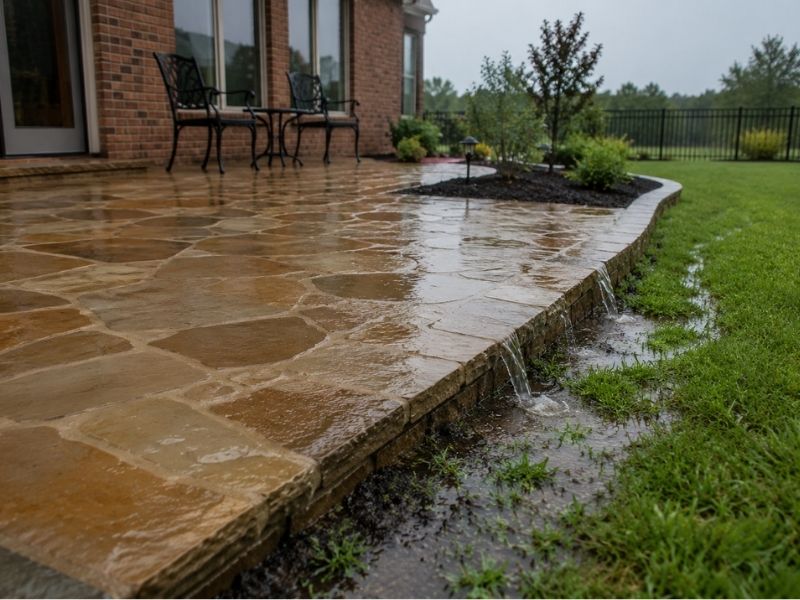
A stone patio adds real comfort and value to a Fort Worth backyard, but heavy rain can turn it into a problem fast. When water has nowhere to go, it runs toward the house and pools against the foundation. Over time, that water can crack slabs, shift soil and lead to costly repairs. Good drainage stops this before it starts. The way a patio gets graded, built and edged decides whether rain flows safely away or sits where it does the most harm.
Why Proper Stone Patio Grading Matters in Fort Worth’s Heavy Rainfall
Grading matters because a flat or poorly sloped patio sends rainwater straight toward your home. Fort Worth gets about 37 inches of rain a year, and storms here often come hard and fast. North Texas clay soil swells when it’s wet and shrinks when it dries, which puts steady stress on foundations. So when a patio sits level or tilts back toward the house, water collects near the walls and soaks into that moving soil. A patio should drop at least 1/4 inch for every foot it runs, which works out to about a 2% slope away from the home. Over a 10-foot patio, that’s roughly 2.5 inches of fall. That small tilt still feels level underfoot while it moves water where it belongs.
Designing Drainage Paths That Move Water Safely Across the Landscape
Planned drainage paths guide rain across the yard instead of letting it pile up near the house. The best time to map these paths is before the patio goes in, not after. A shallow swale, which is a gentle low channel in the lawn, can carry runoff toward a garden bed or the street. Channel drains set at the patio’s low edge catch water and pipe it away underground. Smooth transitions between the patio, the grass and nearby planting beds keep water flowing in one clear direction. When all of these paths connect as one system, rain leaves the patio and never circles back to the foundation.
Choosing a Stone Patio Base That Supports Drainage Performance
A strong, well-built base lets water drain through and under the patio instead of trapping it. Under every good stone patio sit layers of crushed aggregate and sand. Crews compact each layer so the stones stay level and the ground below stays firm. A base that drains well moves water down and out, so it never sits under the pavers and softens the soil. That same base fights settling, which is when stones sink and create low spots that hold puddles. In North Texas clay, this step matters even more, since clay grabs water and moves as it dries. The right base keeps the surface even and the drainage steady for years.
Preventing Water From Collecting Along Patio Edges and Foundation Walls
Water tends to gather at patio edges and foundation walls, so those spots need the most attention. The outer edge of a patio often becomes a trap for runoff. Where the stones meet the house, water can slip into the gap and sit against the wall. Along retaining edges and low corners, puddles form when the slope runs out too soon. A well-designed patio holds a steady pitch all the way to its outer edge, so water never stalls near the foundation. Adding a drain or a planted strip at the base of the wall gives that water somewhere to go. Keeping soil and mulch a few inches below the brick helps too, because piled material traps moisture against the house.
Long-Term Drainage Planning for Stone Patios in North Texas Landscapes
Long-term planning protects both the patio and the foundation as seasons and yards change. Fort Worth weather swings from dry spells to sudden downpours, so drainage has to handle both. A good plan looks at how the whole yard sheds water, not just the patio surface. It also watches the ground beyond the patio, since building code calls for soil to drop about 6 inches within the first 10 feet from the house. Nearby trees, new flower beds and future projects like a pool or shed can all change how water flows. Planning ahead means the patio still drains right years later, even as the landscape grows and shifts around it.
Frequently Asked Questions
Why should a stone patio slope away from the house?
A patio should slope away from the house so rain runs toward the yard instead of the foundation. Water that pools against the walls can seep into the soil, crack the slab and cause foundation trouble over time. A slope away from the home keeps that water moving in a safe direction.
How much slope is recommended for proper patio drainage?
Most patios should drop about 1/4 inch for every foot of length, which equals a 2% grade. On a 10-foot patio, that comes to roughly 2.5 inches of fall. A minimum of 1/8 inch per foot can work on very flat, sunny spots, but 1/4 inch gives more reliable drainage.
Can poor patio drainage contribute to foundation problems?
Yes. When a patio sends water toward the house, that water collects near the foundation and soaks the soil. In North Texas, clay soil swells and shrinks with moisture, which moves the foundation and can lead to cracks. Good drainage keeps that water away and lowers the risk.
What drainage solutions work best for stone patios in Fort Worth, TX?
A correct slope away from the house comes first. Swales, channel drains and planted beds then carry runoff across the yard. A well-compacted, free-draining base rounds out the system. Together these handle Fort Worth’s heavy storms without letting water reach the foundation.
How can I tell if my existing patio is draining water correctly?
Watch the patio during a heavy rain. If water runs off within a few minutes and heads away from the house, the slope is working. Puddles that linger, water flowing toward the walls or damp spots near the foundation all point to a drainage problem worth checking.