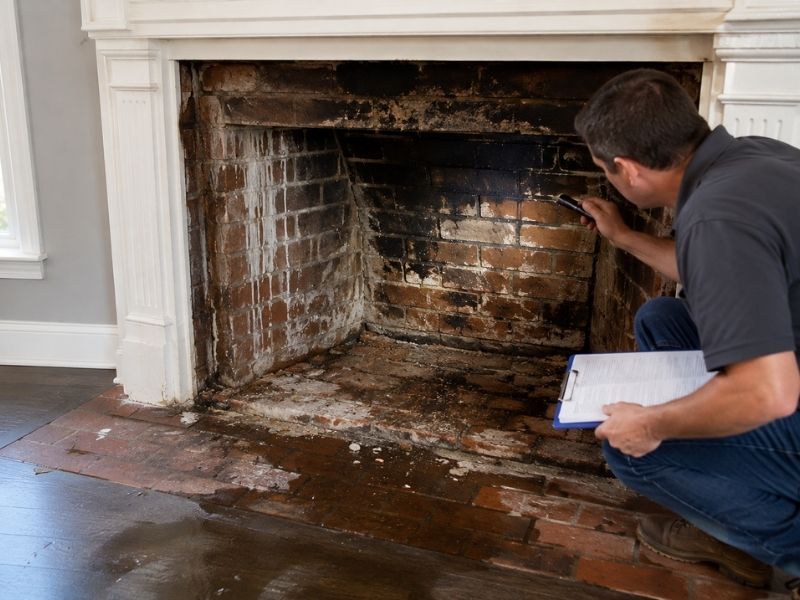
Fireplace Repair for Crumbling Mortar Inside the Firebox
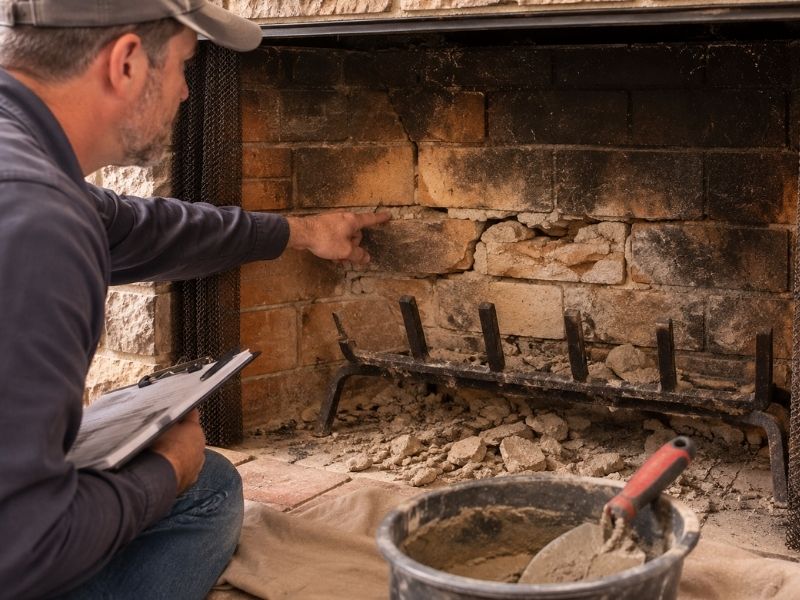
The mortar inside your firebox does a hard job. It sits right where the fire burns, holding the firebricks together while it takes the full force of the heat. Over the years that mortar can start to crumble, and many homeowners only notice once small bits show up on the firebox floor. This kind of fireplace repair deals with the mortar joints inside the combustion chamber, not the outer brick or the chimney above it. Plenty of older houses still have their original fireboxes, so the problem shows up often here. Knowing how that mortar wears out, and what it takes to fix it right, helps you catch the trouble while it’s still small.
How Crumbling Firebox Mortar Develops in Older Tarrant County Homes
Firebox mortar breaks down because it lives through more heat and stress than any other mortar in the house. Every time you light a fire, the joints heat up fast and then cool back down once the flames die. That constant expanding and shrinking works the mortar loose a little at a time. A working wood fire can push past 1,000 degrees, and few materials shrug that off year after year.
Age plays a big part too. Builders of many older Tarrant County homes used lime-based or standard mortar in the firebox, and that mortar can’t stand up to that kind of heat. Decades of use slowly bake and weaken those joints. Moisture makes it worse. Rain and damp air travel down an open flue, soak into the joints, and speed up the crumbling even between fires. So heat, age and water team up on the same joints until the mortar gives out.
Signs the Mortar Inside the Firebox Has Deteriorated
You can spot failing firebox mortar with a simple look inside, usually with a flashlight. Healthy joints sit firm and even between the firebricks. Worn ones pull back, break apart, or leave gaps you can see.
Watch for these signs when you check the firebox:
- Mortar that feels powdery or sandy when you touch it
- Joints that have sunk back below the face of the firebricks
- Small chunks or grit collecting on the firebox floor
- Open gaps or cracks running along the joint lines
- Firebricks that feel loose or shift when pressed
Any one of these means the mortar has started to fail. That matters because the joints are what keep heat and flame inside the firebox where they belong. Once gaps open up, hot gases can reach the brick and framing behind the firebox. Checking these signs before you light another fire is a smart move, since a small mortar problem is far easier to handle than what it can grow into.
Why Firebox Mortar Requires Heat-Resistant Repair Materials
Firebox joints need refractory mortar, a special mix built to survive direct fire. Ordinary masonry mortar, the gray stuff used on outside brick walls, starts to break down under repeated high heat. Inside a firebox it would crack, crumble and fail fast, sometimes within a season or two.
Refractory mortar works differently. It’s rated to handle heat far beyond what standard mortar can take, often well over 2,000 degrees. It also grips the smooth face of firebricks better and stays stable while the joints heat and cool over and over. Some types come premixed and air-cure, while others need heat from a fire to fully set. A mason picks the right one for your firebox and lays it in thin, even joints the way firebrick is meant to be set. Regular mortar might look fine at first, but it puts you right back to crumbling joints in short order.
When Fireplace Repair Can Focus on Mortar Joints
Sometimes fireplace repair only needs to address the mortar joints, and sometimes the firebricks themselves have to come out. A mason figures out which by looking closely at the firebox once it’s cleaned out. If the firebricks are still solid and only the joints between them have worn away, fresh refractory mortar can often bring the firebox back.
The firebricks get a closer look next. Cracked, flaking or crumbling bricks usually need replacing, because new mortar can’t hold a broken brick in place. The mason also checks whether the damage stays inside the firebox or points to a bigger issue behind it, like water coming in from above. Starting with the visible mortar tells you a lot, and a full look confirms whether the joints are the whole story or just the part you can see. That way the repair matches what the firebox actually needs instead of guessing at it.
Why Aging Fireboxes in Tarrant County Deserve Early Attention
Older fireboxes across Tarrant County are worth checking early, because firebox mortar rarely fails all at once. It gives way slowly, one joint at a time, and each open joint lets heat work deeper into the masonry. Catch it while only the mortar is worn, and the fix usually stays small and simple.
Wait too long, and the damage spreads. Failed joints leave the firebricks exposed to more direct heat, and those bricks start to crack and loosen. What could have been a mortar touch-up grows into brick replacement or larger firebox work. Homes built decades ago tend to have the most worn joints, so their fireboxes reward an early look the most. A quick check of the firebox each year keeps a minor mortar issue from turning into a much bigger repair down the road.
Frequently Asked Questions
How do I know if the mortar inside my firebox needs repair?
Look inside the firebox with a flashlight and study the joints between the firebricks. Mortar that turns to powder, pulls back from the brick faces, or leaves open gaps has started to break down. Bits of grit or small chunks sitting on the firebox floor are another clear clue. If you notice any of that, the joints are ready for a closer look before your next fire.
Can regular mortar be used to repair a fireplace firebox?
No, standard mortar can’t handle the heat inside a firebox. The mix used on outdoor brick walls breaks down quickly when it sits right next to flames. Firebox repairs call for refractory mortar, which is made to stay solid through the high temperatures a fire creates. Using the wrong product just leads back to crumbling joints in a short time.
Is crumbling firebox mortar dangerous?
Crumbling firebox mortar is more than a cosmetic flaw. The joints keep heat and flame contained inside the firebox, so once they open up, hot gases can reach the brick and framing behind it. That’s why the condition deserves a real assessment rather than a shrug. Having it checked before you keep using the fireplace is the safe path.
Does old fireplace mortar deteriorate even if the fireplace is rarely used?
Yes, firebox mortar can weaken even in a fireplace that rarely sees a fire. Age alone softens older lime-based joints over the decades. Moisture from rain or damp air moving down the flue soaks the mortar and wears it away between fires. Past heating cycles and old patch repairs add to the toll, so a little-used firebox can still show worn joints.
When should I call a professional for fireplace repair?
Call a mason when you see mortar breaking apart, firebricks that feel loose, or gaps opening along the joints. Those signs mean the firebox needs materials and skills built for high heat. It’s also worth a call when you simply aren’t sure how bad the wear is, since a firebox is hard to judge from a quick glance. A professional can confirm whether the joints alone need work or the firebricks do too.