A Masonry Mailbox Needs Conduit Planning Before Lighting Is Added
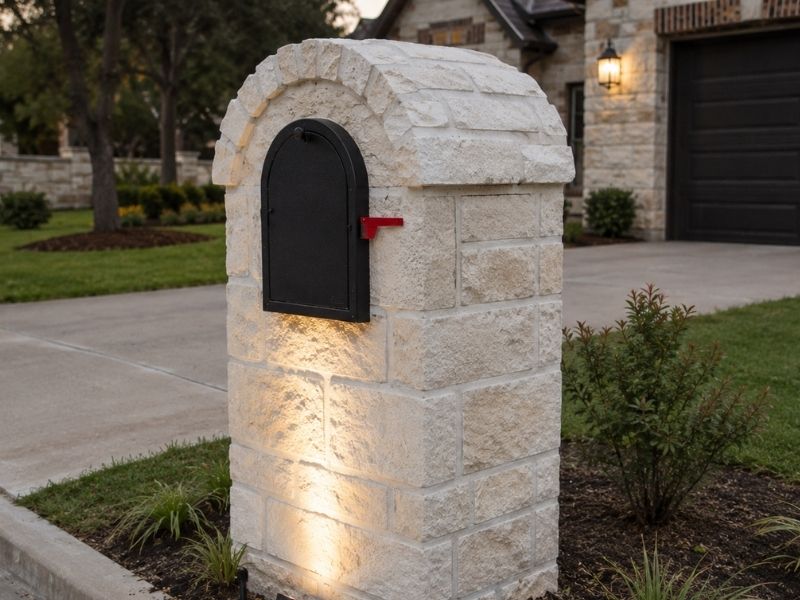
A masonry mailbox looks heavy and stays put for decades, so any wiring inside it should last just as long. That’s why the plan for lights belongs on paper before the first block goes down. Conduit is the hollow pipe that carries and guards the electrical wire, and its path runs through or around the stone. Once the masonry sets, moving that path means cutting into finished work. A little planning up front saves a lot of drilling later, and it keeps the light looking like part of the build instead of a bolt-on.
Plan the Lighting Route Before the Masonry Is Built
The lighting route should be settled before any masonry work starts, because the wire path shapes how the mailbox gets built. When you know where the light will sit, the mason can leave a clean channel for the conduit instead of guessing. Guessing usually means cutting stone later, and that rarely looks good.
Three choices drive the whole plan, so lock them down first:
- Where the light will go, such as a lamp on top, a fixture on the side or a small light near the address numbers
- Where the power comes from, whether that’s a nearby outdoor outlet, a low voltage transformer or a fresh line from the house
- The route the wire takes to get there, through the center of the masonry, along the back or beside the base
Once those three are clear, the conduit can follow a straight, protected path. After that, the mason builds around it. This order keeps the wiring hidden and the finish clean.
Choose Conduit Locations That Keep Wiring Protected
Good conduit placement shields the wire from water, knocks and later masonry work, all without eating into the mailbox’s usable space. Rain and sprinkler spray are the biggest threats, so the conduit should sit where moisture can’t pool or seep in. Weatherproof conduit and sealed fittings handle damp spots, and a slight downward slope lets any water drain out rather than sit on the wire.
Physical impact matters too. A conduit run buried inside the stone or tucked behind a solid face stays safe from lawn tools, car doors and stray bumps. You also want the path clear of spots a future repair might disturb, like the mortar joints someone may need to open. Keep the conduit off the mail slot area and the newspaper box as well, since those parts need their full space to work.
Coordinate Light Fixtures With the Mailbox Design
A light looks built-in when you pick its size, mounting spot, wire exit and access point alongside the stone mailbox design, not after the stone is done. A big fixture on a small pillar looks off, so match the scale to the mailbox first. The mounting surface should be flat and solid where the light attaches, which the mason can plan while laying the stone.
The wire exit is easy to forget, yet it decides where the conduit ends and the fixture begins. Line up that exit with the back of the fixture so no bare wire shows. Plan a small access point nearby too, hidden in a joint or behind the fixture base, so the connection stays reachable. When the fixture, the exit and the stone all line up, the finished light reads as one piece.
Leave Access for Future Lighting Repairs
Conduit planning should leave a way to pull new wire, service the fixture and check for problems without tearing out finished stone. Wires fail, bulbs and fixtures wear out and connections loosen over the years. When the conduit runs as one continuous pipe with smooth bends, a repair tech can pull fresh wire straight through and skip the demolition.
Sharp turns and crushed sections are what trap wire and force someone to break into the masonry. A gentle sweep at each corner keeps the pull easy. Leave a junction or access point at the fixture and at the base, and size the conduit a step larger than the wire needs. That extra room lets a future upgrade, like a brighter light or a smart fixture, go in without a fight.
Plan a Driveway Entrance Upgrade Around Utilities
A driveway entrance upgrade goes smoother when you map the masonry mailbox, its lighting, the conduit and any buried utilities before digging starts. Entrances are crowded underground. Water lines, gas, cable and electric service often run near the road, and a new footing or trench can hit them.
Plan the lighting trench in the same pass as the footing work, since one open trench beats digging twice. When the mailbox, the conduit and the buried lines all share one clear plan, the crew avoids surprises and the entrance comes together in one clean go.
Frequently Asked Questions
Can conduit be installed inside a masonry mailbox?
Yes. Conduit can run right inside the stone or block core, which hides the wire and protects it from weather. The catch is timing. The path has to be set before the mason lays the courses, so the pipe ends up where you want it without any later cutting.
Where should conduit enter a masonry mailbox for lighting?
The entry point follows the fixture and the wire route, so there’s no single right spot. A top lamp wants the conduit rising through the center, while a side light wants it closer to that face. Pick the fixture location first, and the entry point falls into place.
Can a masonry mailbox be retrofitted for lighting?
Yes, though it takes more planning when no conduit went in during the build. Surface conduit or a shallow chase can carry the wire, and a low voltage line often runs with less digging. A pro can map the cleanest path that keeps the cutting to a minimum.
Should conduit planning happen before building a masonry mailbox?
It should. Deciding the electrical route first lets the mason build the channel in, which prevents drilling and cutting into finished stone. Planning after the fact means breaking into solid work, and that costs more and rarely comes out as clean.
What should homeowners consider before adding lights to a masonry mailbox?
Think through fixture placement, the conduit route and a way to reach the wiring later. Get the buried lines near the driveway located before any digging so a footing or trench misses them. Then line up the masonry and electrical work so both trades plan around each other.