
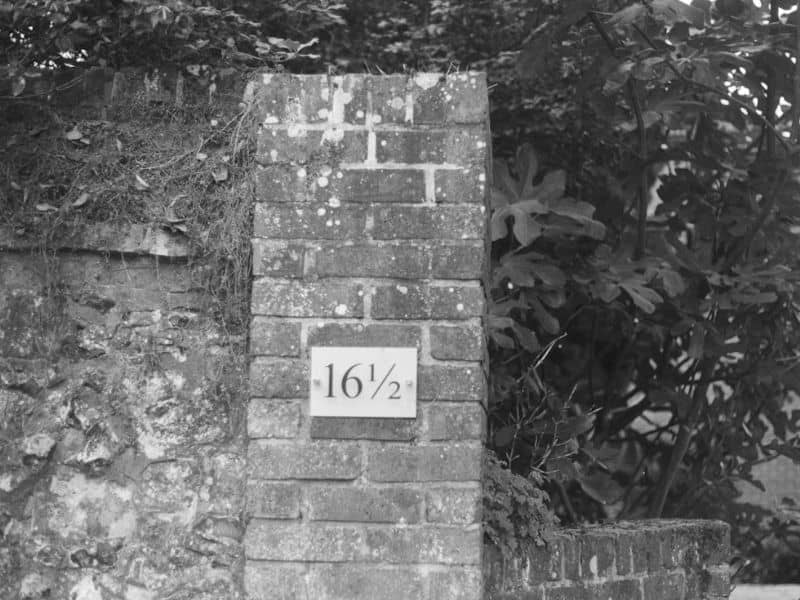
A brick mailbox does more than hold your mail. It also shows people where you live. On many Fort Worth-area lots, the house sits well back from the road. When a home is set that deep, the mailbox can be the first clear marker of your address. That only helps when the numbers read clearly from the street. Plenty of things can get in the way. The spot you pick for the numbers, their color against the brick and even your front plants all shape how fast a driver or carrier can find you.
Why a Long Driveway Changes the Address-Visibility Problem
A long driveway puts distance between your front door and the street. On a deep lot, the house number on the wall may sit too far back to read from a passing car. The brick mailbox usually stands right by the road. That makes it the closest and clearest place to show your address.
Some properties sit on larger lots with generous setbacks. Not every lot is like this, but many older and rural-edge parcels are. On those lots, a visitor slows at the curb and looks for a number. If the house sits far back, they look at the mailbox first, not the front wall.
There is a difference between a number that exists and a number that gets noticed. A small plate tucked on the side of the door still shows your address. But a delivery driver moving at 20 miles per hour can miss it. You want a number someone catches in a glance. When the home is hard to see, the mailbox becomes your main address sign.
Choose a Number Location That Reads From the Approaching Side
Numbers work best when they face the way people come. A brick mailbox often has more than one side. If the numbers sit on the wrong side, drivers pass before they can read them.
The United States Postal Service asks that curbside mailbox numbers go on the side the carrier sees on their normal approach. The numbers should read easily from that direction. That same setup helps anyone else looking for your home, from guests to emergency crews.
A brick mailbox has features that can fight readability. A raised brick pattern can throw shadows across the numbers. A column, a planter or a decorative cap can hide them from certain angles. Numbers set too low can drop behind a shrub or a mounded bed. Before you settle on a spot, picture the view from a slowing car. Pick the face that opens toward that direction.
Contrast Matters More Than Decorative Numbering
A number only reads if it stands apart from the brick behind it. Fancy numbers can look great up close and still vanish from the street. Contrast is what makes them show up.
Brick is a busy background. It comes in mixed tones of red, brown and tan. Mortar joints break the surface into lines. Many bricks have a rough or textured face. A dark bronze number on dark brick can blend right in. A number close to the brick color fades at a distance.
Postal guidance also calls for address numbers in a contrasting color on curbside mailboxes. It sets a size floor too, with numbers at least one inch high on city delivery boxes. That is a national standard, not a local one, so it gives you a baseline. Choose a number color that clearly parts from your brick. Light numbers on dark brick read well, and dark numbers on pale brick do too. Step back to the street and try it. If you cannot read the numbers fast, the contrast is too weak.
Keep Landscaping From Turning the Brick Mailbox Into a Hidden Marker
Plants grow. A brick mailbox that reads clearly in spring can sit half-hidden by late summer. Landscaping is the slow, quiet reason many numbers stop being seen.
Owners often plant around the base of a brick mailbox to dress it up. Over a season or two, that greenery can climb right over the numbers. This matters even more on a long, deep lot. If the mailbox is already your main address marker, a shrub across the numbers leaves nothing for a driver to read.
A few common plantings tend to creep into the sightline:
- Shrubs that spread wider than expected as they fill in
- Ornamental grasses that shoot up tall by late summer
- Low tree branches that droop over the mailbox
- Climbing vines trained onto the brick
- Mounded flower beds that rise up in front of the numbers
The fix is regular trimming. Keep an open line between the street and the numbers. You do not need a bare mailbox. You just need the numbers to stay clear. Look from the road now and then. If a plant has crept in front, cut it back.
Design the Numbering Before the Brick Mailbox Is Built
The best time to plan the numbers is before the first brick goes down. Number placement is easy to forget during a build. When it turns into an afterthought, the numbers often end up squeezed into an odd spot.
Talk through the number location while the mailbox is still a drawing. Think about where the mail door sits and how the brick courses stack up. A decorative band or a stone cap can take the very space you wanted for numbers. Planning early lets the mason leave a clean, flat area at the right height and on the right face.
Good placement also looks better. Numbers centered on an open panel read as part of the design. Ones crammed by the door or split around a column look like a last-minute add-on.
Before you build or change a brick mailbox, check the rules that apply to you. The Postal Service sets its own mailbox standards. Fort Worth points property owners to its current zoning and development regulations for local requirements. Those rules can shift over time and can depend on the property. A quick check up front saves a rebuild later.
