Outdoor Kitchen Masonry That Protects Heat Zones and Utility Openings
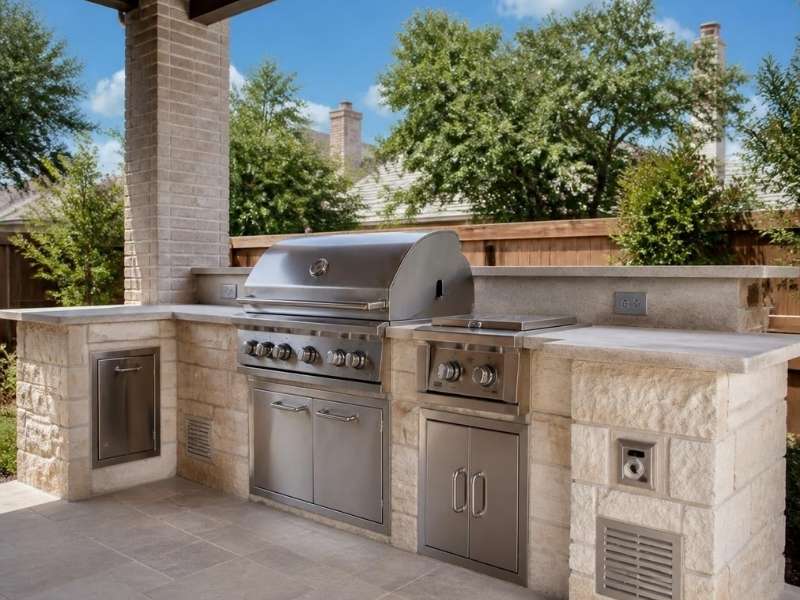
Outdoor kitchen masonry has to do more than look good in a listing photo. In Fort Worth, summer surface temperatures on stone and brick climb fast. A poorly planned masonry shell around a grill or pizza oven can crack. It can scorch. It can even trap gas or electrical lines in places that fail inspection. For developers building outdoor kitchens into new construction, getting the heat zones and utility openings right the first time saves a costly redo later.
This guide covers how to plan masonry around heat sources and utility lines. Get this part right and the structure holds up. Get it wrong and it fails inspection.
Why Heat Zones Need Their Own Plan
A grill island is not one solid block. It’s a masonry shell built around appliances that push out serious heat. That heat does not stay on the cooking surface. It spreads.
Where Heat Actually Travels
Grills, side burners, and pizza ovens push heat sideways and down, not just up. That heat hits the walls around the appliance. It hits the countertop above. Sometimes it reaches the cabinet below. Standard brick or block was not built for that kind of close, steady heat.
Use Heat-Rated Materials Near Appliances
Appliance makers list required clearances in their install guides. They also list which backing materials to use. Cement board should back any masonry near a heat source, not drywall and not plywood. Skipping this step is one of the top reasons outdoor kitchens fail inspection. It’s also a top reason veneer cracks within the first year.
Ventilation Prevents Heat and Gas Buildup
Enclosed grill islands need vents or louvers built into the base. Without airflow, heat and leftover gas can build up inside the cabinet. That’s a fire risk. It also makes the space uncomfortable to stand near.
Planning Utility Openings Before the First Block Goes Down
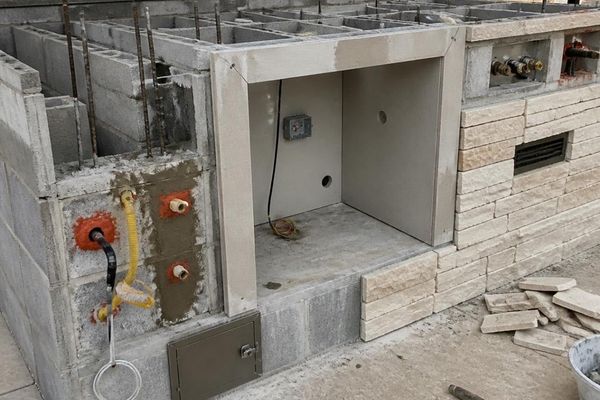
Gas lines, electrical wires, and sometimes water lines need a path through the masonry shell. Plan these openings before the mason starts building. Cutting into finished masonry later weakens it and looks messy.
Coordinate With Trades Early
Bring the gas fitter and electrician to the site before the mason lays the first block. Mark the exact spots for gas stub-outs, electrical boxes, and water shutoffs on the base layout. This one step prevents most of the conflicts that pop up mid-build.
Size Openings for Access, Not Just the Line Itself
A gas line only needs a small opening. But the space around it should allow for future access. If a valve ever needs service, a mason should reach it without breaking out brick or stone. Build in an access panel or a removable stone section near shutoff valves.
Seal Penetrations Correctly
Every opening in the masonry needs a seal against water and pests. Use fire-rated sealant near any heat source. An unsealed gap around a gas line is a common issue that stalls final inspection.
Choosing Masonry Materials for Fort Worth’s Climate
Fort Worth summers push surface temperatures on dark stone and brick well above the air temperature. That heat cycling, plus the occasional winter freeze, puts stress on masonry joints over time.
Light-Colored Veneer Reduces Surface Heat
Dark stone and brick soak up more heat and hold it longer. That raises the surface temperature near cooking appliances even more. Lighter veneer cuts that heat load. It also stays cooler to the touch on countertop edges and nearby walls.
Mortar Choice Matters Near Heat Sources
Standard mortar can wear out faster when it heats and cools again and again next to a grill or oven. Ask your mason about mortar rated for higher heat in the zones closest to the appliance. The rest of the structure can still use a standard mix.
Structural Base Requirements
An outdoor kitchen is not a patio decoration. It’s a permanent structure that carries real weight. That includes countertop stone, appliances, and anything stored inside the cabinet base.
Footing Depth for Fort Worth Soil
Fort Worth’s clay soil expands and shrinks as moisture changes. A shallow footing can shift over just a few seasons. A proper footing, sized for local soil conditions, keeps the base from cracking as the ground moves.
Don’t Skip the Reinforcement
Block walls in an outdoor kitchen base need vertical steel and grout fill. Dry-stacked block with a veneer skin is not enough. This matters more here than on a decorative wall, since the structure carries appliance weight and takes daily heat cycles.
Coordinating Design With Inspection Requirements
Outdoor kitchens with gas appliances often need a permit and inspection separate from general landscaping work. Confirm what your local jurisdiction requires before construction starts. That includes appliance clearance specs and gas line pressure testing. Build this step into your schedule early. It helps you avoid delays from a failed first inspection.
Frequently Asked Questions
What material should back masonry near a grill or pizza oven?
Use cement board rated for heat exposure, not drywall or plywood. It should cover any masonry surface inside the appliance maker’s clearance zone. This step prevents heat damage and lowers fire risk behind the finished surface.
Why do outdoor kitchens need ventilation built into the masonry base?
Enclosed cabinet spaces trap heat and leftover gas without airflow. Vents or louvers in the base let that heat and gas escape. Without them, you get a fire hazard and an uncomfortably hot space.
When should utility lines be planned in an outdoor kitchen build?
Plan them before the mason lays the first block. Mapping out gas, electrical, and water lines early stops you from cutting into finished masonry later. That kind of cutting weakens the structure and looks unfinished.
Does masonry color affect outdoor kitchen performance in Fort Worth?
Yes. Dark stone and brick soak up more heat and hold it longer. That raises the surface temperature near cooking zones. Lighter veneer stays cooler to the touch and cuts down on added heat in already hot weather.
Do outdoor kitchens with gas appliances need a separate inspection?
Often, yes. Many cities require permits and inspections just for gas line work and appliance clearances. These are separate from standard patio or landscaping permits. Check your local rules before construction begins.