Why Brick Chimney Crowns Crack Before the Bricks Below Them
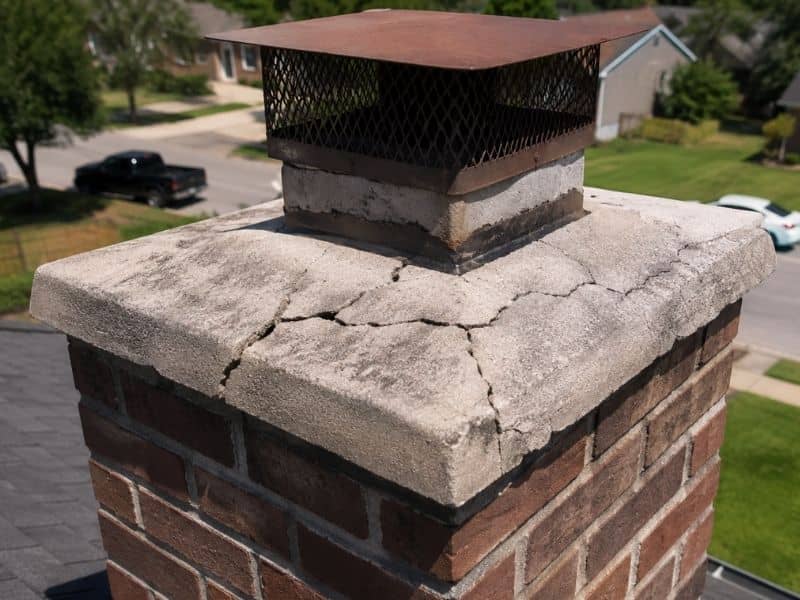
If you own a home, you may have noticed your brick chimney does not age the same way all over. The crown, that flat cap sitting on top of the chimney, takes the worst of the sun, rain and cold air all year long. A construction survey of homes often finds the same thing again and again: a cracked crown sitting above brick that still looks solid. Why does this happen? The crown is not just a cap. It has the hardest job on the whole chimney, and it wears out faster than the brick underneath it.
Why the Chimney Crown Takes More Temperature Stress Than Brick
The crown sits at the very top of the chimney, with nothing above it but open sky. That spot gets full sun in the afternoon and then cools fast once the sun drops. Brick lower down the chimney does not deal with this kind of swing. It sits closer to the roof line, often shaded by trees or nearby structures, and it warms up and cools down at a slower pace.
Fort Worth adds its own twist to this problem. North Texas weather can jump from a hot, dry afternoon to a cold front within hours. That kind of quick shift makes the crown expand and shrink over and over. Concrete and mortar do not love rapid change. Over time, this constant push and pull opens tiny cracks in the surface. The brick below stays more stable simply because it is not exposed the same way.
How Freeze-and-Thaw Cycles Widen Small Crown Cracks
A hairline crack in a crown does not sound like a big deal, but water changes that fast. When rain or dew settles into a small crack, it stays there. If the temperature drops below freezing, that trapped water turns to ice and expands.
Ice takes up more space than liquid water, so it pushes against the sides of the crack. Once things warm back up, the ice melts and the crack is left a little bit wider than before. This happens again the next time it rains and freezes, then again after that. Fort Worth does not see freezing weather every week, but it happens enough times each winter for this cycle to matter. A crack that started as a thin line can turn into a wide gap over a few seasons without any single storm causing sudden damage.
Crown Cracks That Allow Water Into the Chimney Assembly
Not every crack lets water through in the same way. A short hairline crack running across the surface might shed most rain before it soaks in. A crack that runs toward the edge of the crown, or one that connects to the flue, is a different story. Water can travel along these paths and reach parts of the chimney that were never built to get wet.
The direction of the crack matters just as much as its length. A crack pointing toward the chimney’s center, near the flue liner, is more likely to let moisture into the structure than one running along the outer edge. This is one reason two crowns with similar looking cracks can behave in very different ways. Location and direction decide how much risk a crack really carries.
Signs a Cracked Chimney Crown Needs Masonry Attention
Some crown damage is easy to spot from the ground with a pair of binoculars. Look for these signs:
- Cracks that have grown wider than a hairline
- Sections of the crown that look separated or lifted at the edges
- Crumbling or flaking along the crown’s surface
- Chalky white marks near cracks, which can point to water moving through
- Dark stains or damp patches around the top of the chimney after rain
None of these signs mean the brick itself has failed. They point to the crown specifically, since it is a separate piece built and finished on its own. Catching these clues early, before a crack turns into a missing chunk of concrete, makes a much smaller job for whoever ends up doing the repair.
How Crown Design and Drainage Help Limit Future Cracking
A well built crown does more than sit flat on top of the chimney. It should overhang the brick by about two inches on every side, with a slight slope so water runs off instead of sitting on the surface. That slope, called a wash, keeps rain moving away from the flue and off the crown’s face.
Drip edges under the overhang also matter. They stop water from running back under the crown and staining the brick below. In a place like Fort Worth, where hot summers and occasional freezes both show up in the same year, these small design details cut down how much water gets trapped and frozen in the first place. A crown built with the right slope, overhang and sealed surface will always hold up better against these swings than a flat, unfinished one.
Frequently Asked Questions
What causes a brick chimney crown to crack?
Crown cracks usually come from a mix of temperature swings, moisture soaking into the surface and small amounts of material movement. Repeated exposure to sun, rain and cold air over the years slowly wears down the surface until small cracks appear.
Why does the chimney crown crack while the bricks remain intact?
The crown and the brick below it are separate parts, built at different times and exposed to weather in different ways. The crown sits fully open to the sky, while the brick courses often get some shade and shelter, so each part moves and ages on its own schedule.
Can small chimney crown cracks get worse?
Yes. Water can settle into a small crack and freeze during cold weather, and that ice expands and pushes the crack wider. Repeating this cycle season after season is often what turns a hairline crack into a larger one.
How do North Texas temperature swings affect chimney crowns?
Fort Worth often sees fast changes between hot afternoons and cool fronts. This makes the crown expand and contract more often than a location with steady weather, which adds repeated stress to the surface over time.
When should a cracked chimney crown be inspected?
A closer look makes sense once cracks start widening, edges begin crumbling, or you notice damp patches and staining near the top of the chimney after rain. These changes suggest the crown’s surface is breaking down and moisture may be getting past it.